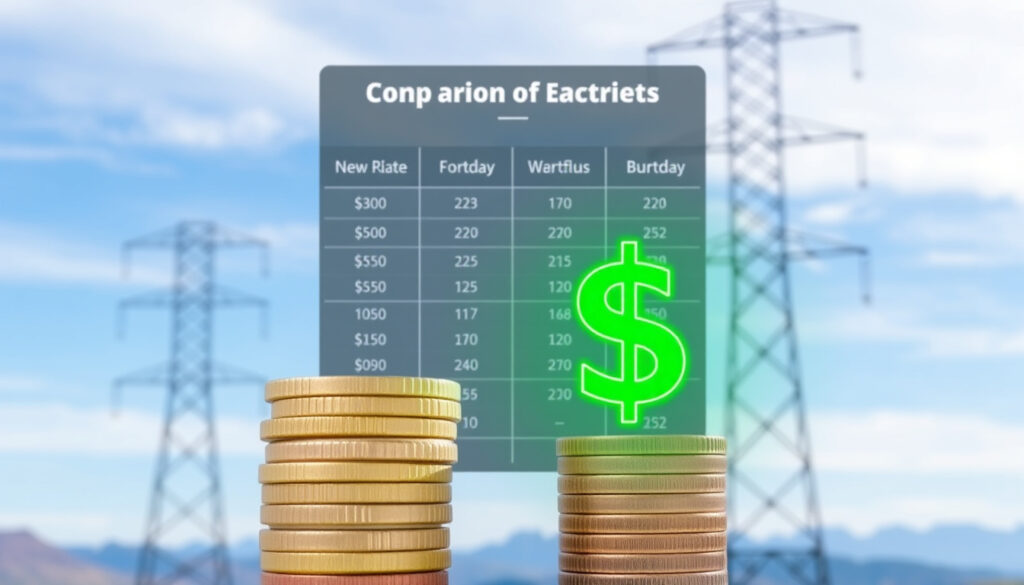
Cheapest Power Company NZ: Compare Rates & Save $400
If you are like most New Zealanders, your power bill feels like a fixed cost, but you might be overpaying by hundreds of dollars a year. According to the Electricity Authority (NZ’s electricity market regulator), switching providers takes as little as 3–4 days, and the average household can save around $400 annually – this guide breaks down the cheapest power companies, how to compare them, and what real users are saying.
Average annual savings by switching: $400 ·
Cheapest provider per Reddit users: Octopus Energy ·
Contact Energy monthly discount offer: Up to $50
Quick snapshot
- Powerswitch users save $400/year on average (Powerswitch / Consumer NZ)
- Octopus Energy is recommended as cheapest on Reddit (r/PersonalFinanceNZ)
- Contact Energy offers $50/month discount for bundling (MoneyHub)
- Exact cheapest provider varies by region and usage (MoneyHub citing MBIE)
- Real-time rate changes are not captured in static guides (Power Compare)
- Consumer reviews on Reddit may not represent all users (community discussions) (MoneyHub citing MBIE)
- Average switch takes 3–4 days (Electricity Authority)
- Use Billy or Powerswitch to compare plans today (Electricity Authority, Powerswitch)
Here are the key numbers at a glance.
| Fact | Detail | Source |
|---|---|---|
| Average annual savings | $400 | Powerswitch |
| Cheapest provider (Reddit consensus) | Octopus Energy | Reddit r/PersonalFinanceNZ |
| Most popular provider | Contact Energy | MoneyHub |
| Number of major providers compared | 4+ | MoneyHub |
| Typical monthly bill range | $200–$300 | MoneyHub |
Who is the cheapest energy supplier right now?
The short answer: Octopus Energy consistently tops informal polls and price comparisons, but the real cheapest option depends on where you live and how much you use.
Current cheapest providers in New Zealand
- Octopus Energy – frequently cited as the cheapest on Reddit (r/PersonalFinanceNZ), with users saying “hands down, Octopus Energy is the cheapest. It is not even close.”
- Electric Kiwi – popular for low-user plans and offers a free “Hour of Power” (MoneyHub).
- Contact Energy – offers up to $50/month discount when you bundle with broadband (MoneyHub).
How to verify the cheapest option for your area
The only way to know for sure is to use a personalised comparison tool. The Electricity Authority’s Billy tool lets you upload a bill or answer a few questions to see savings. Powerswitch (free, independent service from Consumer NZ) works the same way — plug in your address or bill and get offers.
Even if one provider looks cheapest today, real-time rates change. Power Compare advises Kiwis to compare power bills a couple of times a year.
What is the average power bill in NZ?
Most New Zealand households pay between $200 and $300 per month for electricity, according to MoneyHub (a NZ consumer finance resource). But that figure masks big variations based on usage level, region, and plan type.
Average monthly and annual costs
- Typical monthly bill: $200–$300 (MoneyHub)
- Average annual spend: ~$2,400–$3,600
- Powerswitch users save an average of $400/year – that’s 10–15% of annual spend.
How your usage affects the bill
Low-user plans (for households using less than 8,000 kWh/year) can drastically reduce costs. MoneyHub citing MBIE data shows low-user electricity costs per kWh range from 26.75 cents in Dunedin to 41.68 cents in Kerikeri. This means geography alone can change your bill by over 50%.
Regional differences in NZ
- Auckland average low-user kWh cost: 29.67 cents (MoneyHub citing MBIE)
- Dunedin: 26.75 cents
- Kerikeri: 41.68 cents
Your location is the single biggest factor in your power price. Comparing rates without knowing your local kWh price is like guessing.
How can you compare power companies in New Zealand?
Comparison tools take the guesswork out. Three major free services dominate the NZ market, each with its own approach.
Using Powerswitch.org.nz
Powerswitch (free, independent price comparison site from Consumer NZ) asks you to pop in an address or upload a recent bill. It then shows available plans ranked by total annual cost.
Using PowerCompare.co.nz
Power Compare (a NZ comparison website) also uses your address. It lets you filter for bundle options that include gas and/or broadband. The company recommends checking “a couple of times a year.”
Using comparison tables on MoneyHub
MoneyHub (NZ consumer finance resource) compares standard rates from Genesis Energy, Contact Energy, Meridian Energy, Electric Kiwi and others. It also warns that daily charges vary and discounts may apply for early payment or e-statements.
Which power company is the cheapest in Auckland?
Aucklanders face unique pricing. According to MoneyHub citing MBIE data, the average low-user cost per kWh in Auckland is 29.67 cents – lower than many other regions but still variable by provider.
Providers with best Auckland rates
- Electric Kiwi – competitive low-user plans, no lock-in contracts (MoneyHub).
- Octopus Energy – consistently recommended on Reddit as cheapest across NZ including Auckland.
- Contact Energy – offers $50/month discount when you bundle power with broadband (MoneyHub).
Auckland specific plans and discounts
Contact Energy’s bundling deal is especially attractive in Auckland where broadband competition is high. But check if the fixed-term contract includes a break fee – the Electricity Authority warns that fixed-term contracts may charge a fee if you switch early.
A $50/month discount sounds great, but if you are locked into a 12-month contract and rates drop, you could lose more than you save.
The implication: always read the fine print on bundled offers before committing.
What do Reddit users say about the cheapest power company?
User reviews on Reddit’s PersonalFinanceNZ are overwhelmingly in favour of Octopus Energy. Many call it “hands down the cheapest” and praise it for no early exit fees and excellent customer service.
Octopus Energy praised for low rates and service
- Users highlight no lock-in contracts and simple switching process.
- One thread: “Save $600/year moving from Contact to Octopus – easy online signup.”
Negative experiences and considerations
- Some users note that rates can vary by region – Octopus isn’t cheapest everywhere.
- A few complaints about billing errors, but overall satisfaction remains high.
Reddit is not a formal review site, but the sheer volume of positive sentiment around Octopus Energy suggests real consumer approval. Use it as a signal, not a guarantee.
“Hands down, Octopus Energy is the cheapest. It is not even close.”
— Reddit user in r/PersonalFinanceNZ (Reddit thread)
“On average, Powerswitch users can save around $400 a year.”
— Powerswitch (free comparison tool from Consumer NZ)
The choice between cheap and flexible is the real trade-off. The pattern: households that compare every 6–12 months consistently get lower rates than those who stick with the same provider for years.
Upsides
- Average savings of $400/year by switching (Powerswitch)
- Simple switch process – new provider handles everything (Electricity Authority)
- No early exit fees with many providers (Reddit consensus)
Downsides
- Fixed-term contracts may include break fees (Electricity Authority)
- Time-of-use plans require a smart meter (Electricity Authority)
- Cheapest provider changes by region and usage pattern (MoneyHub citing MBIE)
For a broader look at how to compare plans and save, see our guide on switching power providers in NZ.
Frequently asked questions
Can I switch power companies anytime?
Yes, unless you are in a fixed-term contract. The Electricity Authority says you can switch anytime, but check for break fees.
Are there any fees for switching power companies in NZ?
Most standard plans have no exit fee. However, fixed-term contracts may include a break fee (Electricity Authority).
How long does it take to switch power providers?
The Electricity Authority says the average switch takes 3–4 days.
Does the cheapest power company also offer good customer service?
Reddit users report excellent service from Octopus Energy, but service quality varies by provider. Check reviews before switching.
What is the difference between fixed and variable electricity rates?
Fixed rates stay the same for a period (e.g., 12 months). Variable rates can change with the market. MoneyHub recommends understanding which you have before comparing.
Is it worth switching for a small monthly saving?
Yes. Even $10/month adds up to $120/year. With no-fee switches, there’s little downside (Powerswitch).
What is a low-user power plan and who qualifies?
Low-user plans suit households using less than 8,000 kWh/year. They have lower per-kWh rates but higher daily charges (MoneyHub citing MBIE).
Can I bundle power with broadband for more savings?
Yes. Contact Energy offers up to $50/month discount when bundling broadband (MoneyHub). Check if your current provider offers similar deals.
More related posts
 Estimating Software for Contractors – Compare Options for Accurate Bids
 Reese’s Peanut Butter Cups: Recipe Change & Lawsuit 2025
 How to Say ‘How Are You’ in Spanish: Guide to Greetings
 Nga Manu Nature Reserve – Location, Animals & Visitor Guide
 Toyota RAV4 for Sale NZ: Prices, Reliability & Best Years
 Innie vs Outie Vagina: Differences, Normalcy & Facts
 Road User Charges Online: Buy RUC Licences NZ Guide
 Dunedin to Christchurch Flights: Time, Airlines & Alternatives