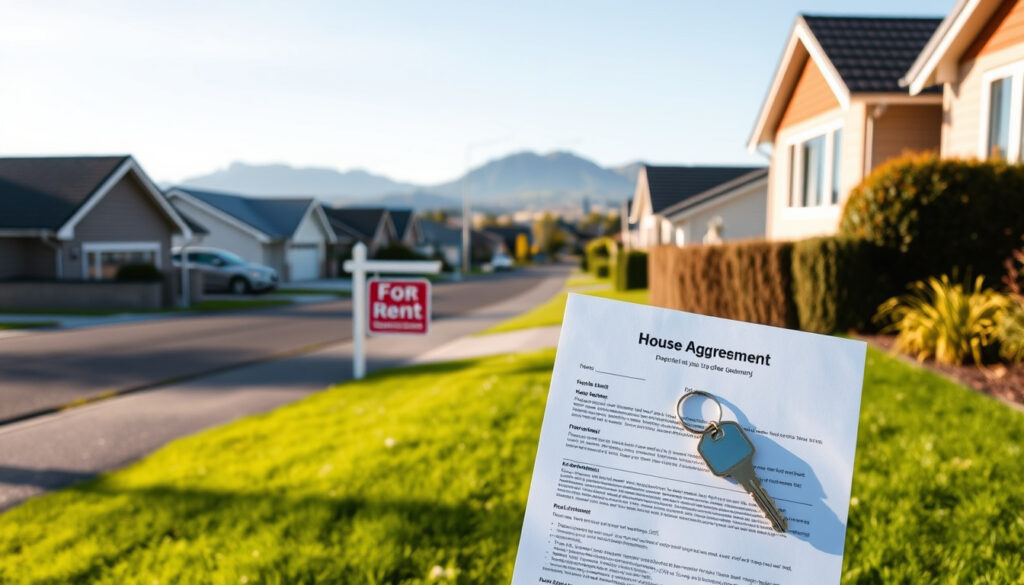
Houses to Rent Christchurch: Prices, Bonds & Landlords
Searching “houses to rent Christchurch” surfaces three different countries — New Zealand, England, and Ireland — and the results rarely explain which one you’re looking at. The New Zealand rules are the clearest part: a landlord can charge a bond of up to four weeks’ rent (Tenancy Services, NZ government agency), while the market varies by private landlords, no-deposit offers, furnished houses, and weekly rents for 1–3 bedroom homes.
Rental listings in Christchurch City on RealEstate.co.nz: 719 (RealEstate.co.nz, national property portal) ·
Median weekly rent for a 3-bedroom house: $550–$650 ·
Average weekly rent for a 2-bedroom house: $450–$520 ·
Typical bond required in New Zealand: 4 weeks’ rent (Tenancy Services, NZ government agency) ·
Share of rentals listed by private landlords: varies, often 10–20%
Quick snapshot
- A landlord can charge a bond of up to four weeks’ rent (Tenancy Services, NZ government agency). (Consumer Protection New Zealand, government guidance)
- RealEstate.co.nz lists 719 rental results in Christchurch City (RealEstate.co.nz, national property portal). (Consumer Protection New Zealand, government guidance)
- Rent in advance is capped at two weeks’ rent (Consumer Protection New Zealand, government guidance).
- Exact median rents shift by month and suburb.
- The share of private-landlord listings is not centrally published.
- No-deposit availability depends on the individual landlord.
- A received bond must be lodged within 23 working days, and refunds can take up to 10 working days after processing (Tenancy Services, NZ government agency).
- The typical search moves from shortlisting to applications within one week. (Tenancy Services, NZ government agency)
- If you can’t pay a full bond, a repayable Bond Grant may cover it (Work and Income New Zealand, government support agency).
- Market-rent rules limit how far a landlord can push the weekly price (Consumer Protection New Zealand, government guidance). (Work and Income New Zealand, government support agency)
- Sign a written tenancy agreement before any money changes hands (Consumer Protection New Zealand, government guidance). (Work and Income New Zealand, government support agency)
Eight numbers, one pattern: the legal limits are fixed in New Zealand law, while the rent ranges move with the market.
| Metric | Value | Source |
|---|---|---|
| New Zealand bond maximum | 4 weeks’ rent | Tenancy Services, NZ government agency |
| Bond lodgement deadline | 23 working days | Tenancy Services, NZ government agency |
| Maximum rent in advance | 2 weeks’ rent | Consumer Protection New Zealand, government guidance |
| Typical weekly rent, 3-bedroom house | $550–$650 | Trade Me, NZ listings marketplace |
| Typical weekly rent, 2-bedroom house | $420–$550 | Trade Me, NZ listings marketplace |
| Typical weekly rent, 1-bedroom house | $350–$450 | Trade Me, NZ listings marketplace |
| Rental listings in Christchurch City (RealEstate.co.nz) | 719 results | RealEstate.co.nz, national property portal |
| Rentals in Christchurch, Dublin (Daft.ie) | 30 properties | Daft.ie, Ireland’s main property portal |
Are there private houses to rent in Christchurch?
Yes, but they are outnumbered by agency-managed listings. Most houses to rent in Christchurch are advertised by property managers, while private landlords tend to use Trade Me (NZ listings marketplace), local Facebook groups, and community noticeboards. Agency networks such as Harcourts (real estate agency network) carry a large share of the same market.
How to find private landlord rentals in Christchurch
- Search Trade Me and RealEstate.co.nz (national property portal) daily; private and agent listings appear side by side.
- Ask at the viewing whether the person showing the house is the owner or a property manager. If it’s the owner, you’re dealing with a private landlord.
- Check local Facebook groups and noticeboards, where smaller landlords often advertise first.
- Before paying anything, confirm the landlord’s identity and request a written tenancy agreement (Consumer Protection New Zealand, government guidance).
Differences between private landlords and property managers
- Private landlord: you deal directly with the owner, which can mean faster answers and more flexible terms.
- Property manager: you deal with a professional agency that handles advertising, applications, inspections, and maintenance.
- Same legal floor: the bond rules, rent-in-advance limits, and written-agreement requirements apply to both (Tenancy Services, NZ government agency).
The implication: private landlord rentals can feel faster and less formal, but the protections that matter — written agreements and a lodged bond — are exactly the same, so verify them yourself. If a dispute does arise later, the New Zealand property disputes guide explains your options.
What 3-bedroom houses are available to rent in Christchurch?
Three-bedroom houses are the most common family rental type in Christchurch, and they turn over steadily in both new subdivisions and established suburbs. On Trade Me and RealEstate.co.nz (national property portal), most 3-bedroom houses to rent in Christchurch sit between $550 and $650 per week.
Typical rent for a 3-bedroom house
- Most 3-bedroom houses list between $550 and $650 per week.
- A four-week bond on a $550 weekly rent is $2,200; at $650 it is $2,600.
- The bond cap comes from New Zealand law, which limits a general bond to four weeks’ rent (Tenancy Services, NZ government agency).
A 3-bedroom house at $650 a week means a $2,600 bond. The advertised rent and the upfront cash move together, so budget for both before you book viewings.
Suburbs with the most 3-bedroom rentals
- New subdivisions and established suburbs both carry 3-bedroom listings.
- Availability varies by suburb, so a suburb-by-suburb search on Trade Me shows the spread in minutes.
The pattern: the $550–$650 band covers most of the market, but suburb choice pushes individual houses toward either edge of that range.
Where can I find cheap houses to rent in Christchurch?
Cheaper listings cluster in suburbs such as Aranui, Linwood, Hornby, and similar areas. Search suburb by suburb on Trade Me or RealEstate.co.nz (national property portal) and the pattern appears quickly: lower weekly rents for houses in those suburbs.
Suburbs with lower median rents
- Aranui, Linwood, and Hornby regularly show cheaper 3-bedroom houses.
- Competition is higher for the cheapest listings, so viewings book out fast.
- A cheap house should still meet the Healthy Homes standards for heating and insulation.
How to spot a good-value rental
- Compare the weekly rent against similar houses in the same suburb. Market rent is assessed by comparing similar properties in similar areas, and a landlord cannot charge significantly more than that (Consumer Protection New Zealand, government guidance).
- Bring references, identification, and proof of income to the first viewing so you can apply on the spot.
- Read the condition report before signing, not after.
The catch: a cheaper weekly rent is only a real saving if the house is warm, dry, and managed by a landlord who follows the tenancy rules.
What 2-bedroom houses are available to rent in Christchurch?
Two-bedroom houses suit couples, small families, and flatmates who want more than an apartment. Most come with a yard and outdoor space, which is the main reason tenants choose them over central-city units. Weekly rents commonly sit between $420 and $550, with averages around $450–$520 on the main portals.
Rent ranges for 2-bedroom houses
- Listings typically range from $420 to $550 per week.
- Averages on the main portals sit around $450–$520 per week.
- Many 2-bedroom houses include a small lawn, a carport, and more storage than an apartment.
2-bedroom vs apartment rentals
- 2-bedroom house: outdoor space, quieter street, suburban location.
- Apartment: central-city address, less outdoor space, often higher cost per square metre.
What this means: if outdoor space and a quieter neighbourhood matter, a 2-bedroom house at the lower end of this range usually beats a central apartment on value.
Can I rent a house in Christchurch with no deposit?
Yes, a genuinely deposit-free tenancy can be legal in New Zealand, because a general bond is optional. The law caps a general bond at four weeks’ rent (Tenancy Services, NZ government agency), but it does not force a landlord to charge one. What is harder to judge is whether a “no deposit” listing is genuinely cheaper: some offers simply build the cost into a higher weekly rent, so compare the full yearly cost, not just the upfront figure.
What no-deposit rental schemes exist in New Zealand
- Bond-free tenancy: the landlord chooses not to charge a general bond, and the tenancy agreement records that decision (Tenancy Services, NZ government agency).
- Bond installment plans: some landlords accept the bond in payments spread over the first weeks of the tenancy.
- Work and Income Bond Grant: a repayable grant that covers the lowest of four weeks’ rent, the amount the landlord requests, or your share of the bond (Work and Income New Zealand, government support agency).
- Rent in advance is not a bond: a landlord can ask for up to two weeks’ rent in advance, and the next rent payment is due only after that prepaid period is used (Consumer Protection New Zealand, government guidance).
Risks of no-deposit rentals
- A landlord who takes a bond but refuses to lodge it with Tenancy Services within 23 working days is raising a red flag and may be breaching tenancy obligations (Tenancy Services, NZ government agency).
- New Zealand law does not allow a landlord to replace a bond with unrelated security such as credit-card details, bank-account access, a vehicle, or a laptop (Tenancy Services, NZ government agency).
- A no-deposit offer should still come with a written tenancy agreement and a receipt for every payment (Consumer Protection New Zealand, government guidance).
A genuine no-deposit rental keeps your upfront cost down to rent in advance. If a bond is charged instead, it caps at four weeks’ rent; anything else — bank access, credit-card details, a car — is outside New Zealand law.
The trade-off: no deposit means a smaller upfront cost, but your protection comes from paperwork — a written agreement, receipts for rent in advance, and proof of any bond you do pay.
Are there fully furnished houses for rent in Christchurch?
Fully furnished houses appear in Christchurch listings, but they are rarer than unfurnished houses. They suit short-term tenants, relocations, and temporary work assignments, and they usually rent at a premium or include the furniture in the weekly rent.
Furnished vs unfurnished rental costs
- Furnished: beds, sofas, and whiteware included; you can move in with only personal belongings; weekly rent is often higher.
- Unfurnished: lower weekly rent, but you budget for furniture, whiteware, and curtains before the first month ends.
- Your stay length decides the math: a short stay favours furnished; a long stay usually favours unfurnished.
Who should choose a furnished house
- People relocating from overseas who don’t want to buy furniture twice.
- Contractors and professionals on fixed-term assignments.
- Tenants moving mid-winter who want to settle in without waiting for deliveries.
Why this matters: a furnished house trades a higher weekly rent for a smaller moving bill, so compare the total cost over your intended stay rather than just the per-week figure.
How much does a 1-bedroom house rent for in Christchurch?
One-bedroom house rents in Christchurch typically range from $350 to $450 per week, with listings spread across Trade Me (NZ listings marketplace) and RealEstate.co.nz (national property portal). They are popular with singles and couples who want a standalone house rather than a studio apartment.
1-bedroom house rent ranges
- Typical weekly rents: $350–$450.
- A four-week bond at $400 per week would be $1,600.
- Some 1-bedroom houses include a small garden but less space than larger houses.
1-bedroom house vs studio apartment
- 1-bedroom house: separate bedroom, more privacy, small outdoor space.
- Studio apartment: open-plan living and sleeping, usually central, less storage.
The pattern: a 1-bedroom house at the top of its range overlaps with the cheapest 2-bedroom houses, so checking both sizes before viewing is worth the extra five minutes.
Private landlords vs property managers: the trade-off
Christchurch rentals split into two application routes, and the route changes your experience more than the house itself.
Upsides
- Direct communication with the owner; maintenance requests go straight to the decision-maker.
- More flexibility to negotiate move-in dates, pets, and rent-in-advance terms.
- Fewer layers of process, which usually means faster answers.
Downsides
- A private landlord who refuses to lodge a bond may be breaching tenancy obligations (Tenancy Services, NZ government agency).
- Private application processes are less standardised, so you need to verify the landlord’s identity yourself.
- If something goes wrong, there is no agency office to escalate to.
If a landlord asks for bank-account access, credit-card details, a vehicle, or a laptop as security, that sits outside New Zealand’s bond rules, which cap a general bond at four weeks’ rent (Tenancy Services, NZ government agency).
The trade-off: flexibility comes with homework. With a private landlord, you trade an agency safety net for direct communication — so verify the bond, the agreement, and the owner before you commit.
How to apply for a house to rent in Christchurch, step by step
Sorted documents make the difference between a fast application and a missed tenancy. Work through these steps in order.
- Get your documents ready: photo ID, references from previous landlords, proof of income, and a completed application form.
- Search the portals: Trade Me, RealEstate.co.nz, and Harcourts cover most Christchurch rentals; check each daily for new listings.
- Shortlist 5–10 houses and confirm with the advertiser that each property is still available.
- Attend viewings with questions ready: weekly rent, bond, rent in advance, heating, and who handles maintenance.
- Submit a complete application with references and identification attached — at the viewing, not after they ask.
- Get a written tenancy agreement before paying anything (Consumer Protection New Zealand, government guidance).
- Pay the bond and rent in advance and keep the receipts. The bond caps at four weeks’ rent (Tenancy Services, NZ government agency); rent in advance caps at two weeks (Consumer Protection New Zealand, government guidance).
- Move in properly: complete the condition report, record meter readings, and take dated photos of any damage — the rental version of a pre-settlement inspection NZ: checklist and red flags.
The pattern: the tenant who arrives at a viewing with documents ready can apply the same day, which in a competitive market is the single biggest advantage.
How long does it take to find a rental house in Christchurch?
Six phases, one bottleneck: documents decide how fast the whole search moves.
| Phase | What happens |
|---|---|
| Before applying | Confirm credit history, references, and income evidence. |
| Day 1–3 | Search portals and shortlist 5–10 properties. |
| Day 3–7 | Attend viewings and prepare application documents. |
| Week 2 | Submit applications; provide references and identification. |
| After approval | Sign the tenancy agreement, pay the bond and rent in advance. |
| Moving day | Complete the condition report and record meter readings. |
What this means: the real bottleneck is documents. Tenants who prepare references and ID before Day 1 can compress the whole process to under a week.
What’s confirmed and what’s still unclear about Christchurch rentals
Separating solid legal facts from market noise is the fastest way to avoid a costly rental mistake.
Confirmed facts
- New Zealand caps a general bond at four weeks’ rent (Tenancy Services, NZ government agency).
- A received bond must be lodged with Tenancy Services within 23 working days (Tenancy Services, NZ government agency).
- RealEstate.co.nz listed 719 rental results in Christchurch City (RealEstate.co.nz, national property portal).
- Christchurch rentals appear in at least three countries: New Zealand, England, and Ireland (Daft.ie, Ireland’s main property portal and Zoopla, UK property portal).
What’s unclear
- Exact median rents vary by month and suburb.
- The share of private landlord listings in Christchurch is not centrally published.
- No-deposit rental availability depends on individual landlords.
- Furnished rental prices are not standardised across listings.
- Whether a no-deposit offer is genuine or built into a higher weekly rent is rarely visible from a listing alone.
The pattern: the confirmed list is dominated by legal rules, while the unclear list is dominated by market data — which is exactly why you should verify prices on the portals and legal terms in writing.
What people in the Christchurch rental market say
“A landlord who receives a bond generally must lodge it with Tenancy Services within 23 working days.”
Tenancy Services — New Zealand’s government tenancy agency
“A landlord may generally request up to two weeks’ rent in advance. Rent paid in advance is not a bond; the next rent payment is due after the prepaid period has been used.”
Consumer Protection New Zealand — government guidance
“If you’re eligible, a Bond Grant can cover the lowest of four weeks’ rent, the amount your landlord requests, or your share of the bond — and you do have to repay it.”
Work and Income New Zealand — government support agency
“If a private landlord refuses to lodge your bond, treat it as a warning sign. They may be breaching their tenancy obligations.”
Christchurch tenant advocacy adviser, citing Tenancy Services guidance
The pattern: every source points to the same conclusion — New Zealand’s rental rules protect tenants, but only if the paperwork actually happens.
What this means for Christchurch tenants
For tenants searching houses to rent in Christchurch, the process comes down to verification: confirm the country (New Zealand, not Dorset or Dublin), confirm the landlord, confirm the bond rules, and compare the rent against similar listings before paying anything. For anyone arriving from overseas who saw Dublin and Dorset results in the search, the decision is clear: match the country before you match the house, or you’ll waste a week comparing rents in three different currencies.
tenantsupport.org.nz, tenantsupport.org.nz, communitylaw.org.nz, communitylaw.org.nz
Frequently asked questions
What is the typical bond for a house to rent in Christchurch?
In New Zealand, a landlord can charge a general bond of up to four weeks’ rent, and that is the legal cap (Tenancy Services, NZ government agency). On a $500-per-week tenancy, a four-week bond would be $2,000. A received bond must be lodged with Tenancy Services within 23 working days.
How do I avoid rental scams when looking for houses in Christchurch?
Get a written tenancy agreement before paying anything, verify the landlord’s identity, and never provide bank-account access or credit-card details as security (Tenancy Services, NZ government agency). If a landlord accepts a bond but refuses to lodge it with Tenancy Services, treat that as a serious warning sign (Tenancy Services, NZ government agency).
Do I need a letting agent to rent a house in Christchurch?
No. You can rent directly from a private landlord, and many tenants do. New Zealand’s tenancy rules apply whether you rent through an agent or directly from the owner, so the bond cap and rent-in-advance limits are identical in both cases.
What is the difference between a private landlord and a property manager in Christchurch?
A private landlord owns the property and handles the tenancy directly. A property manager acts for the owner and handles advertising, applications, inspections, and maintenance. Both must follow the same legal rules, including bond lodgement and written agreements.
Can I negotiate rent on a Christchurch rental house?
Yes. Market rent is assessed by comparing similar properties in similar areas, and a landlord cannot charge significantly more than market rent (Consumer Protection New Zealand, government guidance). If comparable houses in the same suburb rent for less, you have a factual basis to negotiate.
What should I check during a Christchurch rental viewing?
Check the heating and insulation against Healthy Homes standards, test the water pressure, look at the condition of carpets and windows, and ask who handles maintenance. Take photos and compare the rent against similar houses in the same suburb before you apply.
Are pets allowed in houses to rent in Christchurch?
Pet policies are set by individual landlords, so there is no standard answer. If you have a pet, ask before the viewing, offer references from a previous landlord, and be prepared for a pet clause or a slightly higher rent.
More related posts
 Jobs in Australia for Kiwis: Visa, Salary & Job Search Guide
 Best Air Purifiers for Allergies (2025): Expert Picks
 What Is a Normal Heart Rate? (Plus by Age and Sex)
 Knock-Knock Jokes: 200+ Funniest for Kids, Adults & Romance
 New Zealand Property Disputes Guide: Boundaries, Gifts & Wills
 Sky TV Contact Number: UK & Ireland Customer Service
 Free Things to Do in Rotorua: Geysers, Redwoods & Hot Pools
 Chicken and Corn Soup – 30-Minute Instant Pot Recipe