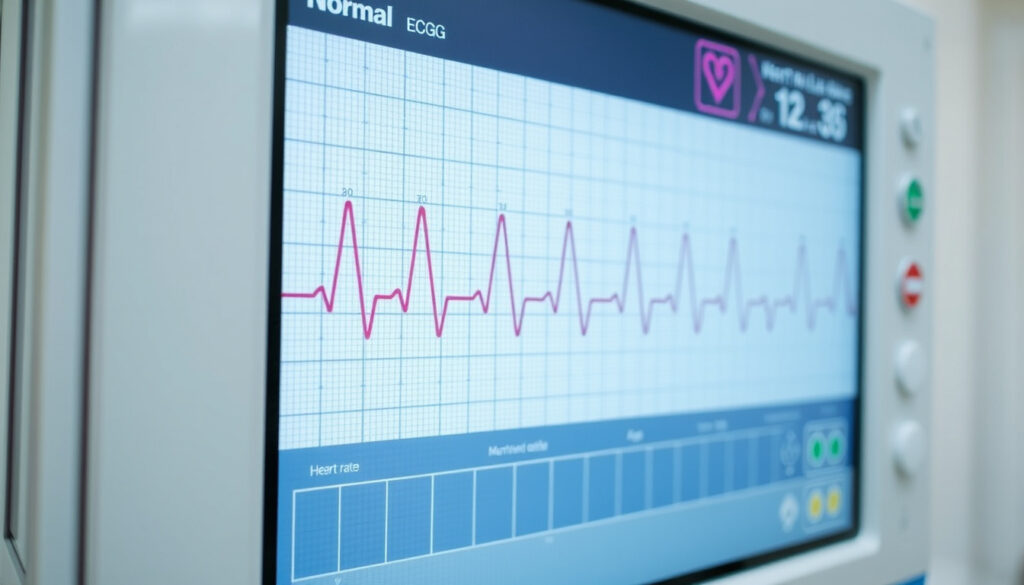
What Is a Normal Heart Rate? (Plus by Age and Sex)
If you’ve ever taken your pulse and wondered whether the number on your watch is normal, you’re not alone. Resting heart rate is one of the most accessible health metrics, but the range of “normal” is wider than most people think.
Normal resting heart rate (adults): 60–100 bpm · Normal resting heart rate (athletes): 40–60 bpm · Maximum heart rate estimate: 220 minus age · Target heart rate zone (moderate exercise): 50–70% of max
Quick snapshot
- Resting: 60–100 bpm (Cleveland Clinic)
- Target exercise zone: 50–85% of max (American Heart Association)
- Maximum: 220 minus age (Harvard Health)
- Resting: 60–100 bpm (may trend higher) (Cleveland Clinic)
- Exercise caution with intensity (American Heart Association)
- Rates below 50 bpm often evaluated (Healthline)
- Resting: 70–100 bpm (NCBI Bookshelf)
- Active children often higher (Healthline)
- Maximum: roughly 200 bpm (MedicineNet)
- Resting: 40–60 bpm (Cleveland Clinic)
- Higher stroke volume (American Heart Association)
- Exercise tolerance greater (Harvard Health)
Five key values, one pattern: the normal range narrows as we age, but fitness level can push the lower bound far below the standard 60–100 bpm.
The pattern: Fitness level and age together determine what is truly normal. A rate of 45 bpm in a marathon runner signals efficiency, while the same number in a sedentary person warrants a checkup.
Here is a summary of the core benchmarks from leading medical organizations.
| Metric | Value | Source |
|---|---|---|
| Normal adult resting rate | 60–100 bpm | Cleveland Clinic |
| Normal athlete resting rate | 40–60 bpm | Cleveland Clinic |
| Maximum heart rate formula | 220 minus age (bpm) | Harvard Health |
| Tachycardia threshold | >100 bpm at rest | Cleveland Clinic |
| Bradycardia threshold | <60 bpm at rest (may require context) | Cleveland Clinic |
What is a good heart rate for your age?
Resting heart rate by age
- Newborns (0–4 weeks): 100–205 bpm (Cleveland Clinic)
- Infants (4 weeks–1 year): 100–180 bpm (Cleveland Clinic)
- Toddlers (1–3 years): 80–140 bpm (NCBI Bookshelf)
- Preschoolers (3–5 years): 80–110 bpm (NCBI Bookshelf)
- School-age children (6–12 years): 70–100 bpm (NCBI Bookshelf)
- Adolescents (13–17 years) and adults: 60–100 bpm (Cleveland Clinic)
- Adults 65+ years: 60–100 bpm but may trend higher (MedicineNet)
The implication: children’s hearts naturally beat faster, and the adult range converges to 60–100 bpm by the teenage years. A 70-year-old with a resting rate of 50 bpm is not necessarily a problem — it depends on fitness and medication history.
Target heart rate zones
- Moderate exercise: 50–70% of maximum heart rate (American Heart Association)
- Vigorous exercise: 70–85% of maximum (American Heart Association)
- Maximum heart rate (approximate): 220 minus your age (Harvard Health)
What this means: the “220 minus age” formula is a population estimate, not a precise safety limit. For a 40-year-old, the target zone for moderate exercise is 90–126 bpm, and for vigorous exercise 126–153 bpm. But individual variation is wide — listen to your body, not just the formula.
How to measure your heart rate
- Place two fingers on your wrist (radial artery) or neck (carotid artery) (American Heart Association)
- Count beats for 30 seconds and multiply by 2 (Cleveland Clinic)
- Best time: first thing in the morning before getting out of bed (Harvard Health)
- Credit: avoid using your thumb (it has its own pulse) (Healthline)
What is the danger zone for resting heart rate?
Resting tachycardia (above 100 bpm)
- Consistently over 100 bpm at rest is called tachycardia (Cleveland Clinic)
- Can be caused by stress, anxiety, fever, dehydration, or underlying heart conditions (Harvard Health)
- Sustained rates above 120 bpm at rest warrant medical evaluation (Healthline)
Resting bradycardia (below 60 bpm)
- Rates below 60 bpm are called bradycardia (Cleveland Clinic)
- Common in athletes and people who exercise regularly, where it’s a sign of efficiency (American Heart Association)
- But if accompanied by dizziness, fatigue, or fainting, it can indicate a problem (Harvard Health)
- Rates below 40 bpm in non-athletes are often a red flag (Healthline)
When to see a doctor
- Resting heart rate consistently above 100 bpm (Cleveland Clinic)
- Resting heart rate below 50 bpm with symptoms (Harvard Health)
- Sudden change in your usual heart rate (Healthline)
- Heart rate that doesn’t return to normal after exercise ends (American Heart Association)
The pattern: the danger zone is less about a single number and more about a combination of an abnormal number plus symptoms. A resting rate of 55 bpm in a marathon runner is healthy; the same rate in a sedentary 70-year-old with dizziness is a warning sign.
The 60–100 bpm guideline is a population average, not a personal prescription. A well-trained athlete with a resting rate of 40 bpm is perfectly healthy, while a sedentary person with a resting rate of 95 bpm may be at higher cardiovascular risk. Context matters more than the number alone.
What is a red flag heart rate?
Signs accompanying abnormal heart rates
- Chest pain, pressure, or tightness (American Heart Association)
- Shortness of breath that comes on suddenly (Cleveland Clinic)
- Dizziness, lightheadedness, or fainting (Harvard Health)
- Rapid or irregular heartbeat that feels like fluttering (palpitations) (Healthline)
Emergency scenarios
- Heart rate >120 bpm at rest with chest pain — call 911 (Cleveland Clinic)
- Heart rate <40 bpm with fainting — seek emergency care (Harvard Health)
- Sudden change from your normal baseline that persists (Healthline)
Differentiating from anxiety or exercise
- Anxiety typically raises heart rate but returns to normal quickly once the stressor passes (Harvard Health)
- Exercise heart rate should decrease gradually after stopping; a rapid drop or very slow recovery can be a red flag (American Heart Association)
- If your heart rate stays elevated for more than 30 minutes after exercise without explanation, see a doctor (Healthline)
Why this matters: a red flag heart rate is rarely the only symptom. The combination of an abnormal pulse with chest discomfort, fainting, or severe shortness of breath is what makes a situation urgent — not just the number on its own.
What is an unsafe heart rate by age?
Unsafe resting rates by age group
- Adults (18+): sustained >100 bpm at rest is generally unsafe (Cleveland Clinic)
- Children (6–12): rates above 140 bpm at rest may be concerning (NCBI Bookshelf)
- Older adults (70+): rates below 50 bpm or above 100 bpm require evaluation (MedicineNet)
- Infants (0–1 year): sustained rates above 180 bpm at rest should be checked (Cleveland Clinic)
Exercise heart rate limits
- Maximum heart rate should not exceed 220 minus age for most healthy people (American Heart Association)
- During exercise, rates above 85% of max for prolonged periods may increase risk (Harvard Health)
- For a 50-year-old, that means staying under 145 bpm unless you’re highly fit and under medical supervision (Healthline)
Factors that modify safety thresholds
- Medications like beta-blockers lower heart rate and can mask tachycardia (Cleveland Clinic)
- Thyroid disorders, anemia, and infections can raise heart rate (Harvard Health)
- Pregnancy increases resting heart rate by 10–20 bpm (Healthline)
- Fitness training lowers resting heart rate over time (American Heart Association)
The implication: unsafe heart rate thresholds are not one-size-fits-all. A rate that’s dangerous for a 70-year-old with heart disease may be perfectly safe for a 30-year-old athlete. Always interpret your heart rate in the context of your own health status and medications.
If you’re over 65 and your resting heart rate suddenly jumps from 70 to 95 bpm without a clear reason (fever, stress, caffeine), it’s worth a checkup. A change of 25 bpm or more from your usual baseline is a stronger signal than any single threshold.
What are 5 signs your heart is in danger?
Chest discomfort
- Pressure, squeezing, or pain in the center of the chest that lasts more than a few minutes (American Heart Association)
- May come and go — can signal angina or a heart attack (Cleveland Clinic)
Shortness of breath
- Unexplained difficulty breathing during rest or light activity (American Heart Association)
- Can be a sign of heart failure or a heart attack (Harvard Health)
Heart palpitations
- Racing, fluttering, or pounding feeling in the chest (Cleveland Clinic)
- May be harmless but can indicate arrhythmias like atrial fibrillation (American Heart Association)
Fatigue and weakness
- Persistent tiredness that interferes with daily activities (Harvard Health)
- Often overlooked but can be a symptom of heart failure or coronary artery disease (American Heart Association)
Swelling in legs
- Swollen ankles, feet, or legs that don’t go down with elevation (Cleveland Clinic)
- Can indicate fluid retention from heart failure (American Heart Association)
What this means: these five signs are not exclusive to heart problems, but when they appear together or with an abnormal heart rate, they merit immediate attention. The most dangerous combination is chest pain plus shortness of breath plus a heart rate over 120 bpm at rest — that’s a call to 911.
Confirmed facts vs. What’s still unclear
Confirmed facts
- Normal resting heart rate for most adults is 60–100 bpm (Cleveland Clinic)
- Heart rate above 100 bpm at rest is tachycardia (Cleveland Clinic)
- Heart rate below 60 bpm at rest is bradycardia (common in athletes) (Cleveland Clinic)
- Maximum heart rate decreases with age (American Heart Association)
What’s unclear
- Ideal resting heart rate for longevity is not precisely defined (Harvard Health)
- Exact normal range may vary by individual health conditions, medications, and genetics (Healthline)
- Optimal heart rate during exercise can differ based on fitness goals (American Heart Association)
“Your resting heart rate is a valuable indicator of your cardiovascular health, but it’s just one piece of the puzzle. The trend over time matters more than any single reading.”
— Harvard Health
“A normal heart rate can vary from person to person. It’s not about hitting a perfect number — it’s about knowing your own baseline and watching for changes.”
— Cleveland Clinic
“Target heart rates are a guide, not a hard limit. The key is to exercise at an intensity that challenges your heart without overdoing it.”
— American Heart Association
The takeaway is clear: a heart rate that stays within the 60–100 bpm range at rest is generally normal, but exceptions are common. For athletes, a rate of 45 bpm is healthy. For a sedentary 75-year-old, a rate of 55 bpm with dizziness could be a warning. The smartest move is to measure your own resting heart rate multiple times over a week, note your average, and discuss any significant changes with your doctor. For the average New Zealander reading this, the implication is simple: know your number, watch for trends, and don’t panic over a single high reading — but do act if you feel unwell alongside it.
allfitwell.com, asianheartinstitute.org, physio-pedia.com, marathonhandbook.com, everlywell.com, medicinenet.com, medicinenet.com
For a comprehensive breakdown, our guide on normal heart rate by age and sex includes detailed charts covering every age group.
Frequently asked questions
Does caffeine affect heart rate?
Yes, caffeine can temporarily raise your heart rate by 5–15 bpm, especially in people who don’t consume it regularly. The effect is typically harmless and subsides within a few hours (Harvard Health).
What is a normal heart rate when sleeping?
During deep sleep, heart rate can drop to 40–60 bpm, which is normal. The average sleeping heart rate for adults is 50–90 bpm (Healthline).
How can I lower my resting heart rate?
Regular aerobic exercise, stress management, good sleep, and staying hydrated can lower resting heart rate over time. Aim for 150 minutes of moderate exercise per week (American Heart Association).
Is a heart rate of 50 bpm normal?
It can be normal for athletes or people with high fitness levels. If you’re not very active and have a resting rate of 50 bpm with symptoms like dizziness, it should be evaluated (Cleveland Clinic).
What time of day should I check my resting heart rate?
First thing in the morning, before getting out of bed and before any caffeine or activity, gives the most accurate resting reading (Harvard Health).
Can anxiety cause a high heart rate?
Yes, anxiety triggers the release of adrenaline, which can raise heart rate to 100–120 bpm or higher. This is usually temporary and resolves when the anxiety subsides (Healthline).
What heart rate is too high during exercise?
For most people, sustained heart rate above 85% of your maximum (220 minus age) for extended periods can be risky. Listen to your body — if you feel dizzy, nauseous, or can’t catch your breath, back off (American Heart Association).
More related posts
 Dyson Fan and Heater – Bladeless Models Review
 St Marks Breast Centre – Private Mammogram, Costs & Services
 Central Otago Real Estate: Buyer’s Market Guide
 First Home Buyers NZ: 5% Deposit, Grants & Loans Guide
 Perfume Gift Sets for Women in Ireland: Best Deals
 J. Cole Concert Tickets 2026: Fall-Off Tour Details
 iPhone 13 Mini to Buy: Best Refurbished Deals Ireland
 Ice Cream Near Me: The Mobile, AL Shop That Beats the Chains