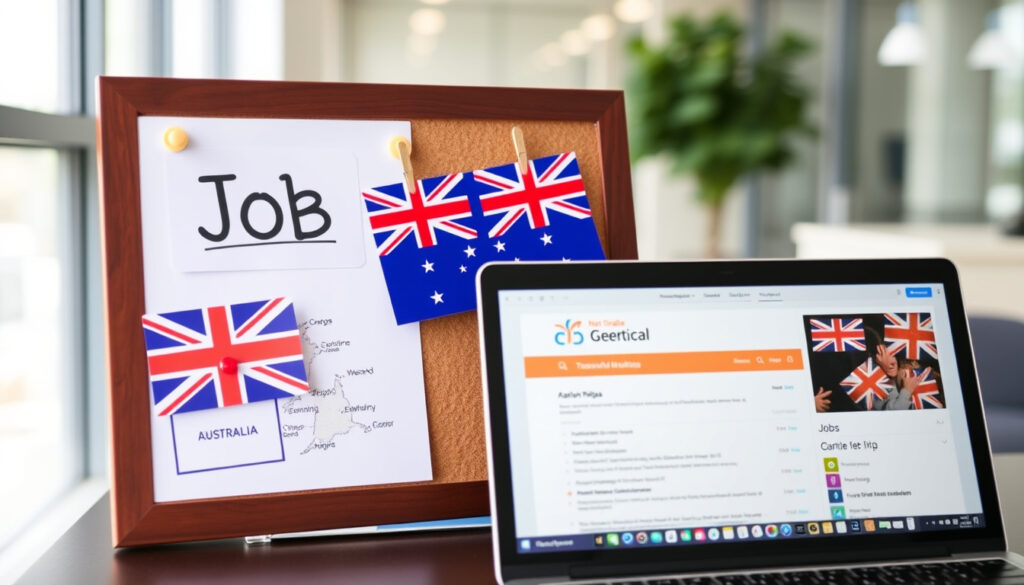
Jobs in Australia for Kiwis: Visa, Salary & Job Search Guide
For New Zealanders eyeing the other side of the Tasman, the promise of higher wages and year-round sunshine has always been a strong lure. With Australia’s mining boom, construction demand, and an unemployment rate sitting at just 3.9%, the opportunity gap has rarely looked wider.
New Zealand citizens living in Australia (2023): 670,000 ·
Average full-time salary in Australia: AUD $95,000 ·
Unemployment rate (March 2024): 3.9% ·
Typical FIFO mining salary range: AUD $150,000 – $200,000 ·
Median house price in Sydney: AUD $1.1 million
Quick snapshot
- Kiwis can live and work in Australia indefinitely under the Special Category Visa (NZ Ministry of Foreign Affairs and Trade)
- No employer sponsorship or pre-arrival visa application required (VisaAide)
- Exact number of new kiwi arrivals each year depends on economic conditions
- Future changes to SCV access and social security eligibility from 2025–2026
- Direct citizenship pathway announced April 2023 for NZ citizens who have lived in Australia for 4+ years (Wikipedia)
- Healthcare, engineering, ICT, and trades remain top in-demand industries for 2026 (IDP Education)
Six key facts that every kiwi job seeker should have at hand before planning the move.
| Fact | Value |
|---|---|
| Visa type for kiwis | Special Category Visa (SCV) |
| Maximum stay | Indefinite |
| Income tax (top bracket) | 45% for income over AUD 180,000 |
| Minimum wage (2024) | AUD $23.23 per hour |
| Average weekly earnings (full-time) | AUD $1,850 |
| Medicare eligibility | Yes, after 6 months residence (for SCV holders from NZ) |
The SCV eliminates the biggest hurdle, but relocation still demands strategy.
How to get a job in Australia as a kiwi?
What are the first steps to find a job in Australia from New Zealand?
Start with the one thing that gives you an edge no other nationality has: your passport. New Zealand citizens flying into Australia are granted a Special Category Visa (subclass 444) on arrival, which lets you live, study, and work indefinitely without applying beforehand, according to the NZ Ministry of Foreign Affairs and Trade (official government travel advice). That means you can land in Sydney or Brisbane and legally start working the same day.
Before you fly, update your CV to Australian standards. Australian employers expect a concise, achievement-focused format — no photo, no NZ-style full career timeline. Highlight transferable experience and quantify results where you can.
Your NZ passport is effectively a work permit. The only thing standing between you and an Australian job is preparation, not paperwork.
Which job boards and recruitment agencies work best for kiwis?
Three platforms dominate the Australian market: Seek.com.au, Indeed.com.au, and LinkedIn. Seek is the largest, carrying listings from major employers and agencies across mining, construction, healthcare, and trades. Indeed aggregates from multiple sources and is strong for entry-level and casual roles. LinkedIn works best for professional and white-collar positions, especially if you activate the “Open to Work” setting with an Australian location.
Industry-specific sites matter too. For mining and FIFO work, try iMINCO or Mining Jobs. For construction, check Construction Careers Australia. Networking in New Zealand expat groups on Facebook — such as “Kiwis needing work in Australia” — can surface unlisted opportunities and give you real talk from people who’ve already made the move.
Recruitment agencies like Hays, Randstad, and Chandler Macleod specialise in placing kiwi workers into Australian trades, engineering, and labour roles. They can fast-track the process because they already understand SCV work rights and handle employer verification.
Can Kiwi citizens work in Australia?
Do kiwis need a work visa for Australia?
No — not in the way most nationalities do. New Zealand citizens are granted the Special Category Visa (SCV, subclass 444) electronically upon arrival at an Australian airport or seaport. The visa is stored in the Department of Home Affairs system, not stamped in your passport. It allows you to work for any employer in any occupation, in any state, with no sponsorship required.
Employer right-to-work checks usually just need a valid NZ passport to confirm SCV eligibility, as noted by vsure (background-checking provider). The catch: the SCV is technically a temporary visa, even though it lets you stay indefinitely. It ceases when you leave Australia, and a new one is granted on your next arrival, subject to health and character checks.
Are there any restrictions on the type of work kiwis can do in Australia?
For most roles, there are none. You can work in retail, hospitality, mining, construction, healthcare, IT — any field a local can enter. Two exceptions exist:
- Some government and defence jobs require Australian citizenship or a security clearance that non-citizens cannot obtain.
- SCV holders cannot vote in Australian elections and face a waiting period of 2–4 years before accessing certain social security payments, including JobSeeker and Austudy.
The implication: for private-sector employment — which covers 95% of the jobs kiwis pursue — the SCV is functionally equivalent to permanent residency. The restrictions only bite if you plan to work in the public service or rely on welfare during a career gap.
Can kiwis move to Australia easily?
What is the Trans-Tasman Travel Arrangement?
The Trans-Tasman Travel Arrangement (TTTA) is the bilateral agreement that lets New Zealand citizens enter, live, and work in Australia without a visa application in advance. It has been in place since 1973 and is the foundation of the SCV system. You need a valid NZ passport and must meet standard health and character requirements — no serious criminal convictions, no untreated tuberculosis.
This arrangement is not reciprocal in the same way for Australians moving to NZ, but for kiwis heading east, it removes the single biggest barrier to international relocation: the visa wait.
What documents do I need to move to Australia as a kiwi?
- Valid New Zealand passport (must not expire during your intended stay)
- No pre-arrival visa application — the SCV is granted on arrival
- Evidence of funds for initial settling (bank statements help at customs if asked)
- Australian tax file number (TFN) — apply online once you arrive
- Australian bank account — can open remotely with some banks, or in person after arrival
- Medicare enrolment — eligible after 6 months of residence for SCV holders from NZ
How much does it cost to relocate from New Zealand to Australia?
Budget at least AUD $5,000–$10,000 for initial expenses, according to reports from kiwi movers. The breakdown includes flights (AUD $300–$800 one-way from Auckland to Sydney or Melbourne), freight shipping for belongings (AUD $1,500–$4,000 depending on volume), temporary accommodation (AUD $150–$300 per night for the first 1–3 weeks), and bond-plus-first-month rent on a rental property (AUD $3,000–$6,000 in major cities).
The pattern: the biggest cost isn’t the move itself — it’s the deposit gap. Renting in Sydney or Melbourne without local rental history often requires 4–6 weeks rent as bond plus upfront payment, which can catch new arrivals off guard.
Kiwis relocating to Australia spend roughly AUD $8,000 on average before they land their first paycheque. The SCV saves you on visa fees, but the housing deposit is the real hurdle.
What jobs pay $200,000 a year in Australia without the requirement of a degree?
Which industries offer the highest salaries for non-degree holders?
Three industries dominate the high-pay-no-degree bracket in Australia: mining and resources, construction management, and IT sales. In mining, roles such as haul truck operator, drill rig offsider, and FIFO electrician regularly pay between AUD $150,000 and $250,000 annually, according to listings on Seek and data from the Australian Bureau of Statistics (ABS) (national labour accounts).
Construction site supervisors with trade backgrounds and a white card can earn AUD $120,000–$200,000, especially on large infrastructure projects in Queensland and Western Australia. IT sales representatives earning commission-based compensation can hit AUD $150,000–$200,000 without a degree, relying on experience and a strong network instead.
How to get into mining or construction management without a degree?
The path is through certifications, not diplomas. Essential tickets include:
- White Card (general construction induction) — mandatory for all construction and many mining sites
- HR or HC driver’s licence — required for heavy vehicle and haul truck roles
- Forklift ticket — useful for warehouse and materials handling roles on mine sites
- Working at Heights and Confined Space tickets — often needed for FIFO roles
- First Aid certificate — minimum standard for remote site work
Many mining companies offer paid traineeships for entry-level roles like pit technician or process plant operator. The Australian Department of Home Affairs (immigration policy authority) lists many trade and operator roles on the skilled occupation list, meaning employer-sponsored pathways exist even though the SCV already gives work rights.
What is the highest paid unskilled job in Australia?
What defines an unskilled job in Australia?
“Unskilled” in the Australian context usually means no formal tertiary education requirement. It does not mean zero training. Most high-paying unskilled roles require short-term certifications — a driver’s licence class, a safety induction, or a machinery ticket — that can be obtained in weeks, not years.
How much do unskilled workers earn in FIFO and remote roles?
FIFO (Fly-In-Fly-Out) roles in remote mining and oil sites offer the highest unskilled pay. Haul truck operators in Western Australia’s Pilbara region earn AUD $120,000–$180,000 for a 2-week-on-1-week-off roster. Train drivers on iron ore railways earn AUD $150,000–$200,000. Offshore oil rig workers — entry-level roustabouts — start around AUD $100,000 and reach AUD $180,000 within two years.
The trade-off: these roles require physical fitness, 12-hour shifts, extended time away from family, and the ability to handle extreme heat or isolation. The Seek Employment Report (Australian job market data) notes that FIFO and remote roles have higher churn rates because the lifestyle is not sustainable for everyone.
What this means: the highest paid unskilled jobs in Australia are not really “unskilled” in practice — they demand resilience, safety discipline, and lifestyle sacrifice. Pay reflects the conditions, not the absence of skill.
Is it easy to get a job in Australia?
What is the current job market like for kiwis in Australia?
Australia’s labour market is the tightest it has been in decades. The unemployment rate of 3.9% as of March 2024 — reported by the Australian Bureau of Statistics (ABS) (national employment data) — means employers are competing for workers, not the other way around. Labour shortages are acute in construction, healthcare, engineering, hospitality, and trades, according to IDP Education (international education and migration analysis).
For kiwis, this creates a window of opportunity. Employers accustomed to sponsoring workers from the UK, India, or the Philippines find NZ citizens easier to hire because the SCV eliminates visa processing delays. A kiwi candidate can start within weeks; a sponsored candidate takes months.
Which cities have the most job opportunities for kiwis?
- Sydney: Largest job market overall. Strong for finance, IT, construction, and healthcare. Median rent ~AUD $650/week.
- Melbourne: Second-largest. Strong for professional services, manufacturing, and education. Slightly lower rents than Sydney.
- Brisbane: Growing fast. Strong for construction, mining support, and healthcare. Cheaper housing than Sydney or Melbourne.
- Perth: Mining capital. Highest average wages in the country. Remote housing market but strong FIFO infrastructure.
- Kalgoorlie and Gladstone: Regional mining hubs with very high wages and lower competition, but limited social amenities.
The pattern: the easiest path for most kiwis is to land in a major city first, secure a job in their existing field, then pivot into higher-paying regional or FIFO roles once they have Australian experience and local references.
Pros and cons of working in Australia as a kiwi
Upsides
- No visa application required — work rights granted on arrival
- Higher wages across mining, construction, healthcare, and trades
- Low unemployment rate means strong demand for workers
- Access to Medicare after 6 months
- Pathway to Australian citizenship available since July 2023
Downsides
- High cost of living, especially housing in Sydney and Melbourne
- No voting rights as an SCV holder
- Limited social security access for first 2–4 years
- SCV is technically temporary — ceases on each departure from Australia
- FIFO and remote roles require lifestyle sacrifice
Step-by-step: How to find a job in Australia from New Zealand
- Check your passport. It must be valid for your intended stay. The SCV is granted on arrival, but a passport that expires within 3 months may raise questions.
- Update your CV to Australian format. Use a clean layout with a professional summary, achievement-based bullet points, and no photo. Include your NZ work rights status clearly.
- Create or update your LinkedIn profile. Set your location to the Australian city you are targeting. Join New Zealand expat groups to network before you arrive.
- Register on Seek and Indeed. Set up email alerts for roles in your industry in your target city. Apply from New Zealand, but note that many employers prefer candidates who are already in Australia and available for interview.
- Research state-specific job markets. Western Australia and Queensland offer the highest wages in mining and construction. Sydney and Melbourne have more diverse professional services and corporate roles.
- Apply for an Australian Tax File Number (TFN) online. You can do this as soon as you arrive. You cannot work without a TFN — employers need it for payroll.
- Open an Australian bank account. Some banks allow you to open an account remotely from New Zealand and activate it in-branch when you arrive.
- Arrange temporary accommodation. Book at least 2 weeks of short-term housing. Use this window to attend interviews, inspect rental properties, and open a local phone number.
- Enrol with Medicare after 6 months. SCV holders from NZ are eligible for Medicare after 182 days of residence. Register early to avoid gaps.
- Consider a recruitment agency. Agencies like Hays, Randstad, and Chandler Macleod specialise in placing NZ candidates into Australian roles. They handle employer right-to-work checks and can fast-track interviews.
What we know and what remains unclear
Confirmed facts
- Kiwis can work in Australia on SCV without a visa application in advance (NZ Ministry of Foreign Affairs and Trade)
- The Trans-Tasman Travel Arrangement remains in effect as of 2024
- Mining FIFO roles often pay above AUD $150,000 (ABS labour accounts)
- Unemployment rate in Australia is around 3.9% as of March 2024 (ABS employment data)
What’s unclear
- Exact number of new kiwi arrivals each year varies by economic conditions
- Future changes to SCV access and social security eligibility from 2025–2026
- Individual salary offers depend on employer, location, and negotiation
- Cost of moving varies significantly based on family size and shipping needs
Voices from across the Tasman
“Most New Zealand citizens entering Australia on a valid New Zealand passport are granted a Special Category visa (subclass 444) on arrival, which allows them to live, study, and work in Australia indefinitely.”
— New Zealand Ministry of Foreign Affairs and Trade (official government travel advice)
“Healthcare, engineering, education, ICT, and trades are the top in-demand industries in Australia in 2026.”
— IDP Education (international education and migration analysis)
“Moving from New Zealand to Australia is not as simple as just booking a flight — you need to budget for bond, rent in advance, and at least a month of living expenses before your first pay.”
— Facebook group “Kiwis needing work in Australia” (expat community experiences)
Summary
The SCV gives New Zealand citizens a head start that no other nationality gets — instant work rights, no sponsorship, no waiting. Australia’s tight labour market and booming mining and construction sectors mean the jobs are there for those who prepare. The trade-off is real: higher wages come with higher housing costs, and the highest-paying roles demand FIFO rosters that test personal resilience. For kiwi workers willing to pursue the right certifications and target high-demand states like Western Australia or Queensland, the path from a NZ job listing to an Australian paycheque is shorter than ever.
ziprecruiter.com, visaenvoy.com, reddit.com, relocateme.substack.com, allaccessmigration.com.au, uk.indeed.com
Frequently asked questions
What is the Special Category Visa (SCV) and how do I get it?
The SCV (subclass 444) is granted automatically to New Zealand citizens arriving in Australia on a valid NZ passport. You do not need to apply before you travel. The visa is electronic and allows you to live, study, and work indefinitely.
Do kiwis need health insurance in Australia?
SCV holders from New Zealand are eligible for Medicare after 6 months of residence. Until then, private health insurance is recommended but not mandatory. Insurance costs roughly AUD $150–$250 per month for hospital cover.
Can kiwis apply for Australian citizenship?
Yes. From 1 July 2023, NZ citizens who have lived in Australia for at least four years and meet residency requirements can apply for direct citizenship, as confirmed by the Wikipedia entry on the SCV.
What are the best cities in Australia for kiwis to find jobs?
Sydney and Melbourne offer the largest job markets across most industries. Brisbane and Perth have strong construction and mining sectors. Regional hubs like Kalgoorlie and Gladstone offer the highest wages but fewer amenities.
How do I transfer my New Zealand driver’s license to Australia?
NZ license holders can drive on their NZ license indefinitely in Australia. To convert to an Australian license, you need to visit a transport office in your state. No driving test is required for a direct transfer in most states.
What is the cost of living difference between New Zealand and Australia?
Overall, Australia is 5–15% more expensive than New Zealand depending on the city. Housing is the biggest difference — Sydney rents are roughly 30% higher than Auckland. Groceries and utilities are broadly similar. Wages in Australia are 20–40% higher on average across trades and professional roles.
Can I bring my pet when moving from New Zealand to Australia?
Yes, but it requires planning. Australia has strict biosecurity rules. Pets must be microchipped, vaccinated against rabies, and undergo a blood test at least 180 days before travel. Quarantine on arrival is typically 10 days. Budget AUD $3,000–$6,000 for the full process.
More related posts
 Auckland to New Plymouth Flights: Guide, Price, Schedule & Tips
 Pre Settlement Inspection NZ: Checklist, Red Flags & Liability
 Mortgage Rates Comparison NZ – 2026 Forecast & Best Rates
 2 Degrees Sylvia Park: Contact, Hours & Troubleshooting
 How to Choose a Dehumidifier: 12L vs 20L Size Guide
 New Zealand Property Disputes Guide: Boundaries, Gifts & Wills
 Estimating Software for Contractors – Compare Options for Accurate Bids
 Houses to Rent Christchurch: Prices, Bonds & Landlords