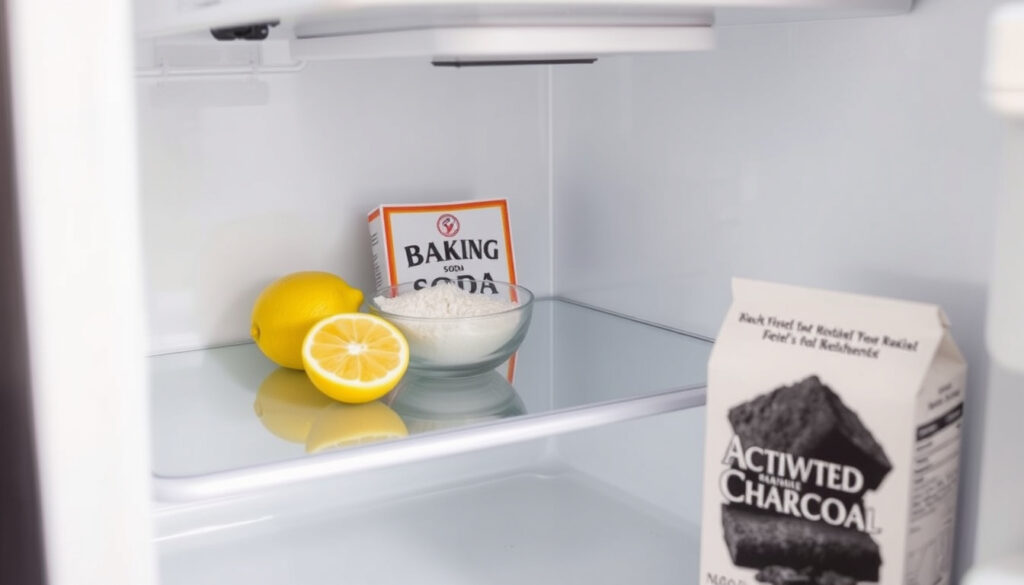
How to Remove Odors from Fridge: Fast & Effective Methods
Opening the fridge to a funky odor that won’t go away is frustrating, but most fridge smells are fixable with a methodical approach—not just a box of baking soda. This guide walks you through finding the source, deep cleaning, and choosing the right deodorizer so you can get back to enjoying leftovers without the side of stench.
Vinegar-to-water ratio: 1:1 ·
Air out duration: 2–3 days ·
Part soak time: 15–20 minutes ·
Vinegar soak time: 24 hours
Quick snapshot
- Vinegar and water solution removes mildew (Penn State Extension)
- Baking soda absorbs some odors (KitchenAid)
- Leaving door open helps air out (Penn State Extension)
- Effectiveness of commercial ozone generators
- Whether lemon juice is as effective as vinegar
- Optimal baking soda replacement frequency (30 days vs. 3 months)
- Baking soda may take up to 3 days to reduce odors (KitchenAid)
- Run empty for 2–3 days with absorbers (University of Nebraska–Lincoln Food)
- After cleaning, place baking soda or activated charcoal inside (University of Nebraska–Lincoln Food)
Four key facts, one pattern: the most effective deodorizers work best after a thorough clean, not as a shortcut.
| Label | Value | Source |
|---|---|---|
| Most common cause | Spoiled food | KitchenAid |
| Best natural absorber | Activated charcoal | University of Nebraska–Lincoln Food |
| Time to air out | 2–3 days | Penn State Extension |
| Vinegar solution ratio | 1:1 | Penn State Extension |
| Baking soda replacement | Every 30 days | Arm & Hammer |
| Activated charcoal effectiveness | More effective than baking soda | University of Nebraska–Lincoln Food |
| Alternative absorber | Fresh coffee grounds | University of Nebraska–Lincoln Food |
| Older remedy | Crumpled newspaper | University of Nebraska–Lincoln Food |
How to get rid of bad smell in the fridge fast?
- Remove all food and inspect each item for spoilage — discard anything expired or suspect.
- Remove shelves, drawers, and bins and wash them in hot water with dish detergent.
- Wipe all interior surfaces including walls, door bins, and seals with a 1:1 vinegar-water solution.
- Let the fridge air out with the door open for 2–3 days to allow odors to dissipate.
- Place activated charcoal or baking soda inside to absorb residual odors.
- Replace the deodorizer regularly — every 30 days for baking soda, every 1–3 months for activated charcoal.
Quick vinegar wipe method
Mix equal parts white vinegar and water in a spray bottle. According to Penn State Extension, this solution is the go-to for removing mildew odours and stubborn smells. Wipe all interior surfaces, including shelves, walls, and door bins. Let it sit for a few minutes before wiping dry with a clean cloth.
- Use a 1:1 ratio of vinegar to water (Penn State Extension)
- For extra-strength, soak removable parts in the solution for 15–20 minutes
Vinegar is fast and effective, but its own smell can linger for hours. Leave the door open for a while after wiping to let both the vinegar and the original odour dissipate.
Baking soda box placement
An open box of baking soda on an interior shelf is a classic recommendation from KitchenAid. It works by absorbing mild odours, but it takes time. The same source notes that it can take up to three days to notice a difference. Arm & Hammer advises replacing the box every 30 days for best results.
Lemon or coffee grounds trick
Cut a lemon in half and place it on a shelf, or set a bowl of fresh coffee grounds inside. Both methods are cited by University of Nebraska–Lincoln Food as natural odor absorbers. Coffee grounds are especially good at absorbing strong smells, though they can impart their own aroma.
The pattern: a quick vinegar wipe handles surface-level smells, but persistent odors require the full air-out method with the door open.
How do I find the source of a fridge smell?
Check for spoiled food
This is the most common cause, according to KitchenAid. Remove every item, inspect expiration dates, and sniff containers. A single forgotten yogurt or bag of wilted greens can permeate the whole fridge.
Inspect drip pan and condenser coils
Odours can also originate from the drip pan under the fridge or from dirty condenser coils. These areas collect moisture and food debris, creating a breeding ground for mold. Wipe the drip pan with a vinegar solution, and vacuum the coils. (Penn State Extension mentions contacting a technician if the smell persists, implying these hidden areas may need professional attention.)
Look for spills and residue
Even small spills under shelves or in drawers can cause persistent smells. Remove all removable parts and wash them in hot water with dish detergent, then sanitize before reinstalling (Penn State Extension).
If you can’t find the source inside, check the back of the fridge. The drip pan is often the culprit for smells that seem to come from nowhere.
The implication: if the source isn’t obvious inside the fridge, the problem is likely in the hidden areas—drip pan or coils behind the appliance.
Why Does My Fridge Smell?
Common causes: spoiled food, spills, mold
Spoiled food is the number one cause, but mold in the rubber door seals or in the drip pan is also common. Penn State Extension recommends washing the interior with hot water and baking soda, then wiping with a vinegar solution to kill mold spores.
Surprising reasons: non-food items, bacteria
Sometimes the smell comes from something you stored that isn’t food—like a forgotten open container of leftovers or even a plastic container that has absorbed odours. Certain plastics can retain smells even after washing. Bacteria can also proliferate in the drainage channel, which is often overlooked.
When nothing is rotting
If you’ve cleaned everything and the smell persists, consider a refrigerant leak. Penn State Extension advises that lingering smells after cleaning may require contacting an appliance technician. A chemical smell (like nail polish remover) could indicate a freon leak, which is a safety concern.
The catch: a chemical or sweet smell signals a refrigerant leak, not a cleaning problem, and requires a technician rather than a DIY fix.
What absorbs odors in a fridge?
Baking soda
Baking soda is the most well-known deodorizer. KitchenAid calls it a “natural deodorizer that can absorb and neutralize mild fridge odors.” But Serious Eats (editorial food site) notes that “baking soda alone won’t fix your funky fridge smell.”
White vinegar
Vinegar neutralises odours chemically by changing pH. It’s recommended by Penn State Extension as a wipe-down solution, and by Serious Eats as an effective cleaner.
Coffee grounds
Fresh coffee grounds absorb smells and leave a pleasant aroma. University of Nebraska–Lincoln Food lists them as a viable option, though they are a secondary remedy compared to activated charcoal.
Activated charcoal
Activated charcoal is the most effective natural absorber. The same University of Nebraska–Lincoln Food source recommends it for stubborn refrigerator odors, noting it outperforms baking soda.
What this means: match the absorber to the odor severity—baking soda for mild, activated charcoal for stubborn, vinegar for surface cleaning.
What is the best deodorizer for a refrigerator?
Commercial deodorizers vs. natural remedies
Commercial products often contain baking soda or activated charcoal in a convenient package. Natural remedies—vinegar, baking soda, coffee grounds, activated charcoal—are cheaper and often just as effective. University of Nebraska–Lincoln Food endorses several natural options, including crumpled newspaper with a cup of water on the top shelf.
Activated charcoal filters
Activated charcoal is the top performer. It traps odor molecules in its porous structure. Look for refrigerator-specific charcoal filters or sachets. Replace them every 1–3 months depending on the product.
Ozone generators (caution)
Some devices use ozone to oxidise odours. However, ozone can damage food and pose health risks. Penn State Extension and other authorities do not recommend ozone generators for home refrigerators. The effectiveness of commercial ozone generators is unclear, and they are not a substitute for proper cleaning.
The best deodorizer is the one that forces you to clean first. No product can fix a fridge full of spoiled food. Always start with a deep clean, then choose your absorber.
Confirmed facts
- Vinegar and water solution removes mildew (Penn State Extension)
- Baking soda absorbs some odors (KitchenAid)
- Leaving door open helps air out (Penn State Extension)
What’s unclear
- Effectiveness of commercial ozone generators
- Whether lemon juice is as effective as vinegar
Wipe inside of unit with equal parts vinegar and water.
USDA Food Safety and Inspection Service — official cleaning guidance
Baking soda alone won’t fix your funky fridge smell.
Just make it water and vinegar 50/50.
Reddit user (lifehacks community)
For anyone battling a smelly fridge, the implication is clear: clean first, then deodorize. The most common mistake is skipping the deep clean and relying on baking soda alone. That approach might work for a faint odour, but for the kind that makes you grimace, you need a full scrub-down with a vinegar solution, followed by two to three days of airing out with an activated charcoal absorber. Penn State Extension confirms that running the empty fridge for 2–3 days with absorbers inside is the most thorough method. For New Zealand readers, the choice is simple: if a quick vinegar wipe doesn’t do it, use activated charcoal from a local hardware store, or call a technician if the smell persists. Otherwise, you’ll be stuck with a fridge that smells like regret—and that’s not a flavour anyone wants.
youtube.com, livesimply.me, extension.k-state.edu, garnerstores.com, reddit.com, facebook.com, reddit.com
A simple way to tackle stubborn smells is to try natural methods for fridge odor removal, which uses common household ingredients.
Frequently asked questions
Can I use bleach to clean my fridge?
Bleach is not recommended because it can damage surfaces and leave harmful residues. Stick to a vinegar-water solution or mild dish soap.
How often should I replace baking soda in the fridge?
Arm & Hammer advises replacing every 30 days, while KitchenAid says about every three months. For best results, go with 30 days.
Is it safe to use coffee grounds in the fridge?
Yes, fresh coffee grounds are safe and can absorb odours. They may impart a coffee scent, which most people find pleasant.
Does activated charcoal really work for fridge odors?
Yes. University of Nebraska–Lincoln Food recommends it as a stronger alternative to baking soda for stubborn odors.
How long does it take for vinegar smell to dissipate?
Vinegar smell usually fades within a few hours, especially if you leave the fridge door open to air out. The odour-neutralising effect remains.
Should I unplug the fridge to clean it?
Unplugging is not necessary unless you need to access the drip pan or coils. However, if you’re airing it out for 2–3 days, it’s safe to unplug.
What should I do if the smell persists after cleaning?
Penn State Extension advises wiping with vinegar again and, if the smell remains, contacting an appliance technician to check for refrigerant leaks or other issues.
Related reading: How to Deep Clean Your Kitchen: A Step-by-Step Guide · Best Air Purifiers for Allergies (2025): Expert Picks
More related posts
 Full Drivers License NZ: How to Get It, Cost & 2025 Changes
 Figure Skating Schedule and Results 2026 – Olympics, ISU, Today
 Auckland Anniversary Day 2026: Date, Regions & Events
 Flights to Vietnam from NZ: Direct Routes & Cheap Months
 Jobs in Australia for Kiwis: Visa, Salary & Job Search Guide
 Chicken and Corn Soup – 30-Minute Instant Pot Recipe
 Fulham F.C. vs Nottingham Forest Lineups – Predicted XIs, Injuries & Team News
 New World Easter Eggs 2026: Rare, Unhealthy & Best Eggs to Buy