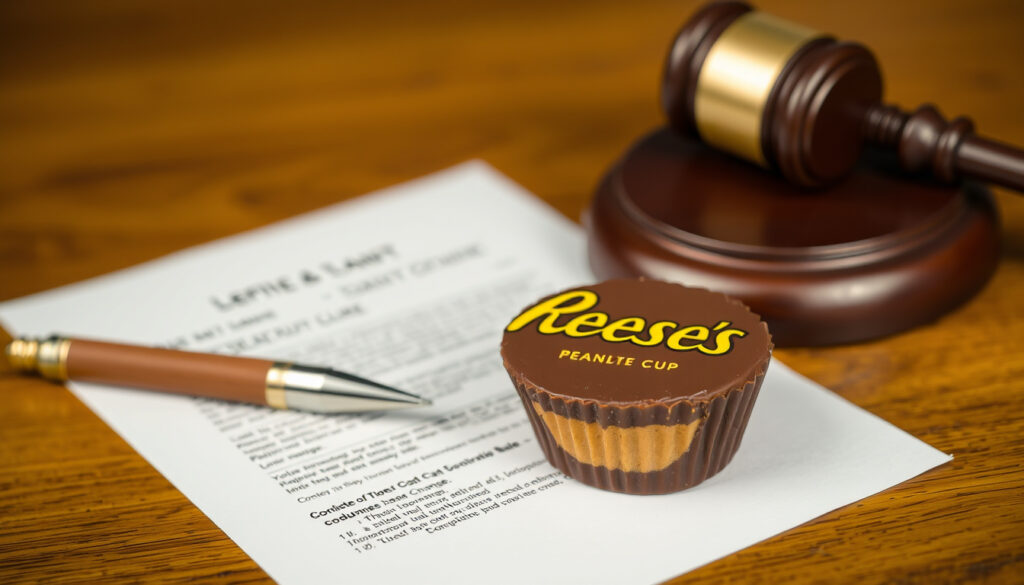
Reese’s Peanut Butter Cups: Recipe Change & Lawsuit 2025
Few candies spark as much nostalgia as the classic orange-and-yellow wrapper. But in early 2025, that familiar taste became the center of a heated debate. Brad Reese, grandson of the inventor, publicly accused The Hershey Company of quietly altering ingredients in some Reese’s products. This article separates the facts from the rumors, examines the health impact, and explains what this means for fans.
Calories per 2-pack (42g): 270 kcal · Total Fat: 16g · Saturated Fat: 6g · Sugar: 27g · Protein: 5g
Quick snapshot
- Hershey reformulated some Reese’s specialty items in 2024-2025 Good Morning America (news outlet)
- Brad Reese posted an open letter accusing Hershey of “quietly replacing” ingredients Good Morning America
- Hershey insists classic Reese’s Peanut Butter Cups remain unchanged Good Morning America
- Exact date of the recipe rollout for seasonal items
- Whether the ingredient changes are permanent
- Final outcome of the public dispute – no lawsuit has been filed as of press time
- 1928 – Reese’s Peanut Butter Cups invented by H.B. Reese
- 1963 – Hershey acquires the Reese’s brand
- 2024 – Hershey quietly changes recipes on some seasonal/specialty items
- 2025 – Brad Reese goes public; Hershey responds
- Potential for broader consumer backlash and calls for labeling transparency
- Possibility of regulatory interest in “chocolate candy” vs “milk chocolate” classification
- Growth of healthier peanut butter cup alternatives
Five key specs, one contrast: the recipe dispute hinges on whether a product lists “milk chocolate” or “chocolate candy” – a small language shift with big implications.
| Attribute | Value |
|---|---|
| Introduced | November 15, 1928 Good Morning America (background) |
| Manufacturer | The Hershey Company |
| Standard package weight | 42g (2 cups) |
| Calories per 2-pack | 270 kcal |
| Total Fat | 16g |
| Saturated Fat | 6g |
| Sugar | 27g |
| Protein | 5g |
| Serving suggestion per day | 1 pack occasionally, per health guidelines |
What is going on with Reese’s Peanut Butter Cups?
In early 2025, Brad Reese – grandson of H.B. Reese – published an open letter on LinkedIn accusing The Hershey Company of altering ingredients in some Reese’s products. The controversy quickly spread to national news. Good Morning America (investigative report) reported that the dispute centers on seasonal and specialty items that now carry labels like “chocolate candy” and “peanut butter creme” instead of the traditional language.
Is the Reese family suing Hershey?
- Contrary to some online claims, no lawsuit has been filed. Brad Reese’s public accusation and open letter have been amplified through media coverage, but Good Morning America noted that the current search results show no evidence of a formal court filing. The dispute remains a public-relations battle.
What exactly changed in the recipe?
- Hershey acknowledged that some Reese’s products have been reformulated, but stressed that the classic Reese’s Peanut Butter Cups are made the same way they always have been – roasting fresh peanuts and combining them with milk chocolate. The changes apply to new product lines, shapes, and seasonal innovations. According to Good Morning America, the key test is labeling: if a product says “milk chocolate” and “peanut butter,” it likely is the original formula; if it says “chocolate candy” and “peanut butter creme,” it’s a reformulated product.
The implication: The recipe change is real, but limited. Consumers who buy the classic two-cup pack are getting the same product they always have – but seasonal shapes (eggs, pumpkins, hearts) may taste different.
The Reese family’s concern is that even limited ingredient substitutions risk eroding decades of brand trust. For devoted fans, the label language is now the quickest way to tell what’s inside.
Is a Reese peanut butter cup healthy?
Let’s be direct: a Reese’s Peanut Butter Cup is a treat, not a health food. But with 270 calories and 27g of sugar in a standard 2‑pack, how often can you indulge without regret?
How many can I eat per day?
- Health experts recommend limiting added sugars to 25–36g per day for adults. A single 2‑pack (27g sugar) nearly fills that quota. Good Morning America (health context) referenced dietary guidelines when covering the nutrition profile.
What are the nutrition facts?
- Per 2‑pack (42g): 270 kcal, 16g total fat (6g saturated), 27g sugar, 5g protein. The high saturated fat and added sugar make Reese’s a “sometimes” food. No peanut butter cup meets strict dietary standards for daily consumption.
Why this matters: If you eat one 2‑pack daily, you’re already exceeding the American Heart Association’s recommended added sugar limit. The trade-off: occasional enjoyment is fine, but daily habit can add up.
The phrase “peanut butter creme” on newer items may also mean a different fat profile – potentially more saturated fat from palm oil – though Hershey has not published side‑by‑side nutrition data for the reformulated seasonal products.
Why do they taste different now?
The flavor shift that sparked thousands of online complaints has a paper trail. According to Good Morning America (recipe investigation), the change appears to involve replacing milk chocolate with a compound chocolate (chocolate candy) in some seasonal products.
What ingredients changed?
- Compound chocolate uses vegetable oils instead of cocoa butter, resulting in a waxy mouthfeel and different melting point. The peanut butter filling in those items is now labeled “peanut butter creme,” which implies added stabilizers and sugars. NBC News (consumer report) covered the ingredient shift and consumer reactions.
When did the change happen?
- Hershey likely rolled out the new formulations in 2024 for seasonal items (Easter eggs, Halloween pumpkins). Reports of an “off” taste spiked on social media in late 2024 and peaked again after Brad Reese’s public letter in early 2025.
How did consumers react?
- Overwhelmingly negatively. Reddit and Twitter threads from late 2024 describe the new seasonal cups as “waxy,” “greasy,” and “not the same.” The backlash prompted national coverage from both Good Morning America and NBC News (consumer trust report).
The pattern: ingredient substitution for cost savings is common in big food, but brand loyalty makes Reese’s a lightning rod. The company’s refusal to confirm the exact timeline has only fueled distrust.
How many calories are in a 2‑pack?
Calorie counts vary slightly by size, but the standard 2‑pack is the most commonly bought format. Here’s how the numbers line up.
Calories in a single cup
- One standard Reese’s cup (21g) contains about 135 kcal.
Calories in a 2‑pack (42g)
- The classic 2‑pack delivers 270 kcal, with 16g fat and 27g sugar. That’s roughly 13% of a 2,000‑calorie diet.
Calories in mini cups
- Mini Reese’s cups vary by package, but a single mini (about 9g) provides 45–50 kcal. A 5‑piece serving equals roughly 225–250 kcal.
What this means: The 2‑pack is the calorie equivalent of a small meal. For someone tracking calories, one pack can be a reasonable treat – but the sugar load remains the bigger concern.
What is the healthiest peanut butter cup?
If you’re looking for a better-for-you option, the classic Reese’s isn’t the only game in town. Several alternatives have emerged, and homemade recipes let you control the ingredients entirely.
Store‑bought alternatives
- Justin’s Dark Chocolate Peanut Butter Cups – Made with organic dark chocolate and real peanut butter (no palm oil fillers). Per 2‑cup pack: ~200 kcal, 5g sugar.
- Unreal Dark Chocolate Peanut Butter Cups – Certified vegan, gluten‑free, and lower in sugar (~7g per serving).
- ChocZero Keto Cups – Sweetened with monk fruit, these contain less than 1g sugar per cup.
Homemade recipes
- Combine melted dark chocolate (70%+ cocoa) with natural peanut butter (no added sugar). Pour into molds, freeze – you control the fat and sweetener content. Many recipe blogs offer simple microwave versions.
Nutritional comparison
- Compared to Justin’s: Reese’s has 35% more calories and 4× the sugar. The trade-off is taste familiarity, but the gap is significant.
The trade-off: No peanut butter cup qualifies as “healthy” by strict dietary definitions – but dark chocolate, nut‑based versions with less sugar are a clear step up. For daily snackers, the best choice is the one with the shortest ingredient list.
Timeline
Six decades of history, one pivotal year: the 2024 recipe change marks the first major ingredient controversy for Reese’s in the modern era.
- 1928 – H.B. Reese invents the Reese’s Peanut Butter Cup in Hershey, Pennsylvania.
- 1963 – The Hershey Company acquires the Reese’s brand and expands distribution nationwide.
- 2024 – Hershey quietly begins using compound chocolate and “peanut butter creme” in seasonal and specialty Reese’s items.
- 2025 – Brad Reese posts open letter; media coverage goes viral; Hershey defends the classic cup as unchanged.
The pattern: the timeline reveals that the controversy is not about the flagship product – it’s about the secondary product lines. Yet the brand halo effect means consumer trust takes a hit across the entire portfolio.
Clarity: What’s confirmed, what’s not
Confirmed facts
- Hershey changed ingredients on some seasonal Reese’s products Good Morning America
- Brad Reese publicly accused Hershey of “quietly replacing” ingredients Good Morning America
- Hershey states classic cups are unchanged Good Morning America
- No lawsuit has been filed Good Morning America
What’s unclear
- Exact rollout date of the recipe change
- Whether the change is permanent
- Full nutrition data for the reformulated seasonal items
- Any potential legal or regulatory action
What the critics and defenders say
“Our iconic Reese’s Peanut Butter Cups are made the same way they always have been. We start by roasting fresh peanuts to make our one‑of‑a‑kind peanut butter, combined with milk chocolate.”
– Hershey spokesperson, as reported by Good Morning America
“I felt it was necessary to stand up and say something. Altering even a single product line risks damaging a century‑long bond with consumers.”
– Brad Reese, open letter on LinkedIn, via Good Morning America
“I bought the seasonal eggs thinking they’d taste like the classic cup – they were waxy and greasy. Something’s definitely changed.”
– Consumer review on Reddit, cited by NBC News consumer report
The message from both sides is clear: Hershey insists the core product is untouched, while the Reese family and consumers demand transparency. The gap between corporate assurance and consumer experience remains wide.
Summary: Where things stand
The Reese’s controversy of 2025 is a case study in brand trust versus cost‑saving innovation. Hershey has reformulated some seasonal products, but insists the classic cup is untouched. Brad Reese’s public accusation has amplified consumer anxiety, and no formal lawsuit has been filed. For fans who want the original taste, the safest bet is to check the label: if it says “milk chocolate” and “peanut butter,” you’re likely safe; if it says “chocolate candy” and “peanut butter creme,” you’re getting something different. For health‑conscious buyers, the shift only strengthens the case for dark‑chocolate alternatives or homemade versions. For Hershey, the challenge is restoring trust – one ingredient label at a time.
For New Zealand consumers who grew up on the imported classic, the choice is clear: stick with the standard two‑cup pack (which remains unchanged) or explore local alternatives like Justin’s, – or risk the reformulated seasonal shapes and decide for yourself.
Frequently asked questions
When did Reese’s change their recipe?
Hershey began rolling out a reformulated recipe for some seasonal and specialty Reese’s products in 2024. The classic Reese’s Peanut Butter Cups remain unchanged per the company.
What exactly did Hershey change in the peanut butter cups?
In some products, Hershey replaced milk chocolate with compound chocolate (labeled “chocolate candy”) and the peanut butter filling with “peanut butter creme.” This affects seasonal items, not the standard two‑cup pack.
Why is the Reese family suing Hershey?
As of press time, no lawsuit has been filed. Brad Reese, grandson of the inventor, posted an open letter accusing Hershey of ingredient changes, but the dispute remains public – not legal.
Are there any peanut butter cups without artificial ingredients?
Yes. Brands like Justin’s, Unreal, and ChocZero offer cups made with dark chocolate and natural peanut butter, often with lower sugar and no artificial flavors.
Can I still buy the original recipe Reese’s cups?
Yes. Hershey states that the classic Reese’s Peanut Butter Cups (the standard two‑cup pack) are made with the original recipe – milk chocolate and real peanut butter.
How has the recipe change affected sales?
Hershey has not released sales data. However, viral consumer backlash and national news coverage suggest potential short‑term impact on seasonal product lines.
Related reading
More related posts
 Mutonhori Wairoa District Council Dispute – No Official Records Found
 Red Bull F1 News: Reshuffle, Verstappen & Team Updates
 Joe Keery End of Beginning: Did He Sing It? Djo Facts
 How to Fix Pixelated Photos: 5 Proven Methods (Free & Paid)
 Failed PhD Course Fees Refund: Can You Get Money Back
 Six Kings Slam 2025: Schedule, Winners & Prize Money
 Words That Start With K: Complete List with Meanings & Game Tips
 How Much Horsepower Does a Horse Have? Facts vs Myths