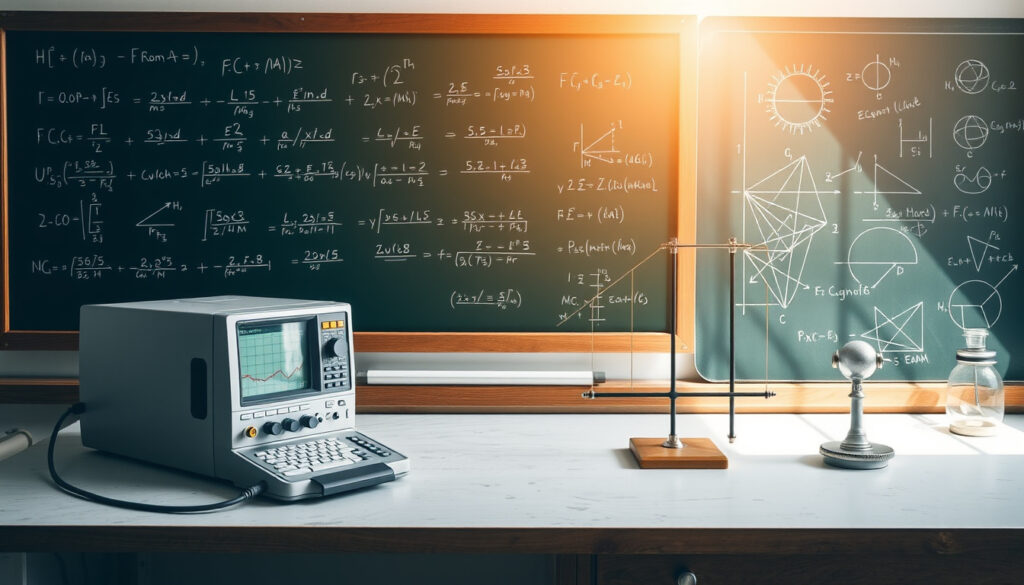
NCEA Level 3 Physics: Standards, Past Papers & Study Tips
If you’re sitting down to plan your final year of NCEA Physics, you already know the biggest challenge isn’t the equations — it’s figuring out where to start. With six standards to master, from mechanical systems to modern physics, the path to Excellence can feel like a maze of past papers, formula sheets, and conflicting advice.
NCEA Level 3 Physics standards: 3 externally assessed and 3 internally assessed · Total credits: 22 credits across all standards · Externally assessed standards: 91523 (Waves), 91524 (Mechanical Systems), 91526 (Electrical Systems)
Quick snapshot
- NZQA manages all NCEA assessments (NZQA (New Zealand Qualifications Authority))
- Formula sheets are provided in each external exam (NZQA Official Resource Booklet 2023)
- Past papers are publicly available on the NZQA website (No Brain Too Small (NZ physics education website))
- Exact format of future assessments subject to NZQA changes
- Whether specific internal assessment topics will change from year to year
- NCEA Level 3 Physics exams are held annually in November (refer to NCEA Exam Timetable 2026)
- Start revision at least 8 weeks before exams (NCEA Exam Timetable 2026)
- Use results for University Entrance and scholarship applications (NZQA qualifications)
- Check official results via NZQA login (NZQA qualifications)
Six standards, one pattern: three externals test your ability to apply theory under time pressure, while three internals let you show depth through investigations and reports.
The table below summarises the overall structure of the qualification.
| Attribute | Value |
|---|---|
| Number of external standards | 3 |
| Number of internal standards | 3 |
| Total credits | 22 |
| Year introduced | 2012 (revised 2016) |
| Highest NCEA Level | 3 |
| Prerequisite suggested | NCEA Level 2 Physics or equivalent |
What is covered in NCEA Level 3 Physics?
Overview of external standards
- 91523 Waves — wave behaviour, interference, standing waves, electromagnetic waves (No Brain Too Small (NZ physics education website))
- 91524 Mechanical Systems — kinematics, forces, momentum, circular motion, rotational dynamics (YouTube – Complete Exam Walkthrough NCEA Level 3 Physics Mechanics)
- 91526 Electrical Systems — DC circuits, capacitors, inductors, AC theory (No Brain Too Small (NZ physics education website))
Each external standard is three hours and contributes to the subject endorsement for Physics. The implication: these three exams carry the most weight for your final grade, making them the highest priority for revision time.
Summary of internal assessments
- 91521 Practical Investigation — design and carry out an experiment to test a physics theory (No Brain Too Small (NZ physics education website))
- 91522 Application of Physics — research and report on a real-world physics application
- 91525 Modern Physics — demonstrate understanding of atoms, photons and nuclei
Internals are worth 4 credits each and require a written report or investigation log. Many schools schedule these in Term 1 or Term 2 to free up Term 3 for external revision.
Internal assessments let you earn credits early and improve your overall grade, but they demand careful time management. Students who rush the practical investigation often lose marks on the evaluation section, which carries heavy weighting.
The implication: treat internals as your safety net, but don’t rely on them to carry your portfolio. Externals still account for the majority of the final grade.
Where can I find NCEA Level 3 Physics past papers?
Official NZQA past papers and exam reports
- NZQA website — all past exam papers and schedules are free to download (No Brain Too Small (NZ physics education website))
- Each standard has past papers back to 2012. Use the “Assessment Resources” section on NZQA.
Combine these with the official assessment schedules to understand how markers allocate grades. The schedules include sample answers for Merit and Excellence.
Third-party practice resources
- StudyTime — free walkthrough videos and printable answer sheets (StudyTime (free NCEA study resources))
- No Brain Too Small — curated question sets by topic with worked solutions
- Thinkswap — user-uploaded study notes (174-page complete set available) (Thinkswap (student study notes marketplace))
What this means: the internet is full of NCEA Physics past papers, but official NZQA versions should be your primary source because they reflect the exact exam format and wording. Use third-party sites for extra practice after you’ve exhausted the official ones.
Is there a physics formula sheet for NCEA Level 3?
What formulas are provided in the exam
- Yes — NZQA provides a formula sheet for each external exam (News Insights (NZ educational news platform))
- The sheet includes all essential constants: speed of light c = 3.00 × 10⁸ m s⁻¹, electron charge q = −1.60 × 10⁻¹⁹ C, and Planck’s constant h = 6.63 × 10⁻³⁴ J s (NZQA Official Resource Booklet 2023)
- Formulas are grouped by topic: mechanics, waves, electricity, and modern physics
Additional formulas you should memorise
- While the sheet covers core equations, some derivations (e.g., combining two formulas to solve for a variable) are not explicitly listed
- Common memorisation candidates: F = ma usually on sheet, but τ = Iα (angular form) may appear indirectly
The pattern: students who rely solely on the formula sheet without understanding when to apply each equation often pick the wrong one. Markers report that incorrect equation selection is a frequent error in Mechanics exams (YouTube – Complete Exam Walkthrough NCEA Level 3 Physics Mechanics).
The formula sheet is a tool, not a crutch. You still need to know which concept each equation represents and the units it produces. When you open the exam, first review the sheet to refresh your mental categories.
The trade-off: extensive memorisation isn’t necessary, but fluency in selecting and rearranging formulas is critical. Practice timed past papers to build that skill.
How do I study NCEA Level 3 Physics Mechanics?
Key topics in Mechanics standard 91524
- Kinematics in two dimensions (projectile motion)
- Forces and Newton’s laws
- Momentum and impulse
- Circular motion and centripetal force
- Rotational dynamics (torque, moment of inertia, angular momentum) (YouTube – Complete Exam Walkthrough NCEA Level 3 Physics Mechanics)
Study techniques and problem-solving strategies
- Start with the formula sheet: identify which equations apply to each topic
- Work through past papers under timed conditions — aim for 3 hours for one exam
- Use the NZQA assessment schedule to check your answers against Merit and Excellence criteria
One effective method: after solving a problem, write a one-sentence explanation of why you chose that equation. This builds the conceptual understanding that markers look for in higher-grade answers.
The implication: Mechanics is often considered the most calculation-heavy standard, but conceptual clarity separates Merit from Excellence. Focus on understanding derived quantities like angular momentum — they appear frequently in the final question.
What are the NCEA Level 3 Physics waves topics?
Wave systems standard 91523
- Wave properties: frequency, wavelength, amplitude, speed
- Interference: Young’s double-slit experiment, diffraction gratings
- Standing waves: nodes, antinodes, harmonics on strings and in pipes
- Electromagnetic waves: spectrum, energy, and the relationship c = fλ (No Brain Too Small (NZ physics education website))
Key concepts: interference, diffraction, standing waves
- Path difference and constructive/destructive interference are central
- Standing wave harmonics: know the formulas for fundamental and overtone frequencies
- Solve diffraction grating problems using d sin θ = nλ
Past exam trends show that free-response questions on standing waves and diffraction gratings often carry the highest point values. Practice drawing the wave patterns as part of your answer — many markers award marks for correct diagrams.
Why this matters: the Waves standard (91523) is frequently the top-scoring external at Level 3, possibly because the formula sheet includes most relevant equations. That makes it a great target for boosting your overall grade.
How do I get NCEA Level 3 Physics study notes?
Free online notes from education websites
- No Brain Too Small — topic summaries, quick quizzes, and formula lists (No Brain Too Small (NZ physics education website))
- StudyTime — video walkthroughs and printable note sheets (StudyTime (free NCEA study resources))
- Thinkswap — comprehensive 174-page study notes uploaded by students (Thinkswap (student study notes marketplace))
Note-taking tips for physics students
- Organise notes by standard, then by topic: define key terms, list formulas, add worked examples
- Create a summary sheet for each standard that fits on one page — this forces you to prioritise
- Include diagrams: wave patterns, circuit diagrams, free-body diagrams — these help visual memory
The pattern: students who make their own notes (rather than just downloading ready-made ones) recall information more effectively during exams. A 40-minute note-making session after each class can replace hours of last-minute cramming.
The best study notes are the ones you build yourself. Using a blank copy of the formula sheet to test yourself is a proven way to identify gaps before the exam.
The catch: free notes are a great starting point, but they may not cover every nuance of the current standard version. Always cross-check against the latest NZQA exam schedule.
Step-by-Step Study Plan for NCEA Level 3 Physics
Building a study plan around the three externals and three internals ensures you cover all topics without last-minute panic.
- Create a master list of all standards and their credit values. Use the No Brain Too Small (NZ physics education website) to verify the standards.
- Schedule internals early. Complete 91521 and 91522 in Terms 1 and 2 to reduce external pressure. Allocate 2–3 weeks per internal.
- Start external revision 8 weeks before November. Dedicate 2 weeks each to Mechanics, Waves, and Electrical Systems, then 2 weeks for mixed revision with past papers.
- Use the formula sheet as a diagnostic tool. Every time you start a new topic, write down the relevant formulas from memory. Check against the official sheet (News Insights (NZ educational news platform)).
- Simulate exam conditions at least twice. For each external, sit a full past paper in one sitting with a timer. Grade yourself using the official schedule.
- Review the “common mistakes” highlighted in NZQA exam reports. These are available on the NZQA website for each standard and often point to exactly what prevents an Excellence.
The implication: a structured plan reduces anxiety by turning the large syllabus into manageable chunks. Students who follow a similar approach report feeling more confident walking into the exam room.
Clarity check: what’s settled and what’s open
Confirmed facts
- NZQA manages all NCEA assessments
- Formula sheets are provided in external exams
- Past papers are publicly available on NZQA website
- Three external standards – 91523, 91524, 91526
- Three internal standards – 91521, 91522, 91525
What’s unclear
- Exact format of future assessments subject to NZQA changes
- Whether specific internal assessment topics will change from year to year
- Optimal study timetable varies by individual – no single plan works for everyone
Perspectives from the field
“The speed of light in a vacuum is 3.00 × 10⁸ m s⁻¹, and the charge on an electron is −1.60 × 10⁻¹⁹ C. These constants appear in multiple contexts across the wave and electrical standards.”
NZQA Official Resource Booklet 2023
“NCEA Level 3 Physics covers six standards: three externally assessed and three internally assessed. The external standards are Waves, Mechanical Systems, and Electrical Systems.”
No Brain Too Small – Level 3 Physics Overview
“Common mistakes in Mechanics include misinterpreting the question and selecting the wrong equation. Practising with past papers under timed conditions helps avoid these errors.”
YouTube – Complete Exam Walkthrough NCEA Level 3 Physics Mechanics
“The formula sheet is organised by topic, grouping mechanics formulas together, then electricity, then waves. Knowing the layout can save you time during the exam.”
News Insights – Level 3 Physics Formula Sheet Guide
The takeaway from these perspectives is consistent: success in NCEA Level 3 Physics comes from understanding the resources available — formula sheets, past papers, and clear explanations — and using them strategically. The experts agree that systematic practice, not memorisation alone, drives Excellence.
For the average Year 13 student in New Zealand, the decision is clear: invest 8–10 hours per week starting in Term 3, focus on past papers after mastering the formula sheet, and use the internal assessments as early credit builders. The alternative — cramming in October — consistently leads to Merit- or Achieve-level results. With the right plan, NCEA Level 3 Physics is one of the most rewarding subjects to tackle.
Frequently asked questions
What credits do I need for NCEA Level 3 Physics?
You need at least 14 credits in NCEA Level 3 Physics to count toward the subject endorsement. The full qualification requires 22 credits across the six standards.
Can I take NCEA Level 3 Physics without Level 2 Physics?
While not officially required, most schools recommend NCEA Level 2 Physics because many Level 3 concepts build on it. Some students succeed with strong mathematics backgrounds, but the jump is steep.
How long are NCEA Level 3 Physics exams?
Each external exam is three hours. Internals have no fixed time limit but are typically completed over several weeks.
Are there scholarships for NCEA Level 3 Physics?
Yes – the NZQA Scholarship Physics exam is available for high-performing Year 13 students. It requires deeper conceptual understanding beyond the standard curriculum.
What calculators are allowed in NCEA Level 3 Physics exams?
Only approved graphics calculators are permitted. Check the NZQA calculator list for models like the Casio fx-9750GII or the TI-84 Plus.
Do universities require NCEA Level 3 Physics?
For engineering, physics, and some science programmes, many universities require Level 3 Physics. Check specific university entrance requirements on the NZQA website.
Is there a practical component in NCEA Level 3 Physics assessments?
Yes – standard 91521 (Practical Investigation) involves a hands-on experiment. Standard 91522 also requires research into a real-world application, which may include practical elements.
More related posts
 Stranded on Honeymoon Island: Canceled, Couples Update
 New Balance Slip-On Men’s Shoes: Are They Worth It
 Packed to the Rafters: Complete Guide to the Beloved Series
 เกมสล็อต pglucky88.win ชนะ: Slot Game Verification Review
 Black Snow Season 3: Release Date, Cast, Filming Updates
 Cheapest Power Company NZ: Compare Rates & Save $400
 Nga Manu Nature Reserve – Location, Animals & Visitor Guide
 Flights to Air New Zealand – Direct US Routes and Deals