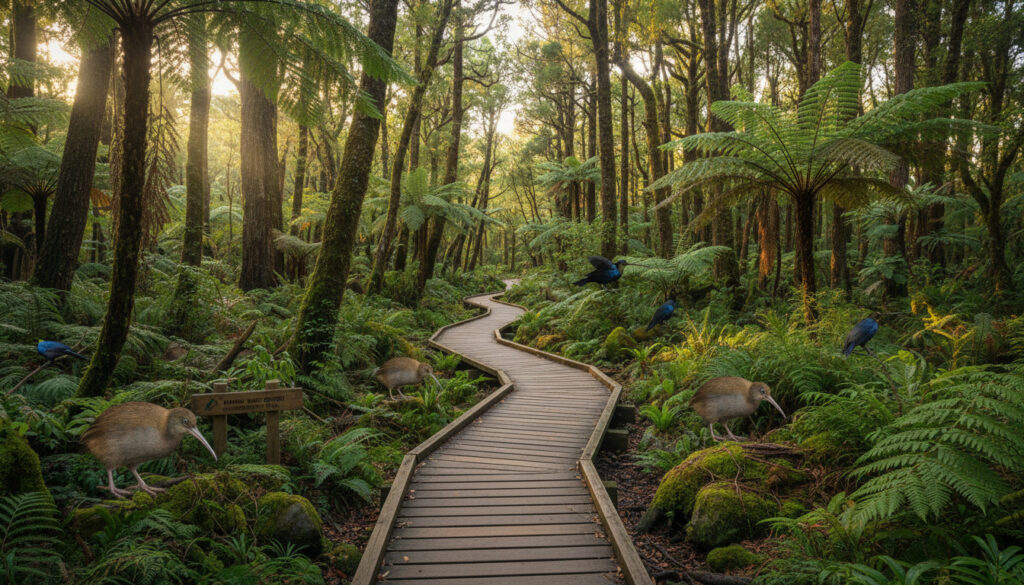
Nga Manu Nature Reserve – Location, Animals & Visitor Guide
Ngā Manu Nature Reserve occupies 14 hectares of coastal lowland swamp forest in Waikanae, Kāpiti Coast, preserving the largest remnant of this threatened ecosystem on New Zealand’s lower North Island. The sanctuary maintains aviaries, enclosures, and a specialized nocturnal house housing native species including kiwi, kākā, kākāriki, and tuatara, functioning as a critical ecological stepping stone between Kapiti Island and the Tararua Range.
Established as a charitable trust to protect the region’s diminishing lowland forests, the reserve partners with the Department of Conservation on breed-for-release programs for at-risk wildlife. Unlike mainland islands protected by pest-exclusion fences, Ngā Manu utilizes enclosed habitats to safeguard vulnerable populations while allowing wild birds such as tūī, kererū, and pūkeko to move freely through the swamp forest canopy.
The 2017 opening of the Kāpiti Expressway significantly improved access from Wellington, positioning the reserve as an accessible destination for wildlife enthusiasts. Visitors encounter over 60 bird species within a mosaic of kahikatea and pukatea forest, ponds, and maintained lawns that support both conservation breeding and public education.
Where is Ngā Manu Nature Reserve and How to Get There?
Waikanae, Kāpiti Coast, 50km north of Wellington
14 hectares of coastal lowland swamp forest
Direct connection via Kāpiti Expressway (SH1)
Free on-site parking available
- Proximity to Wellington: Approximately one hour’s drive from the capital via the expressway
- Public Transport: No direct bus service; taxi or rideshare required from Waikanae Railway Station
- Accessibility: All pathways wheelchair and pushchair compatible with on-site wheelchair available
- Forest Type: Largest surviving remnant of coastal lowland swamp forest on the Kāpiti Coast
- Companion Required: Wheelchair users advised to bring assistance for aviary door navigation
- Facilities: Toilets, picnic areas, and seating distributed throughout the grounds
- Wildlife Corridor: Strategic position linking Kapiti Island populations to Tararua Range
| Feature | Details |
|---|---|
| Address | Waikanae, Kāpiti Coast, Greater Wellington |
| Total Area | 14 hectares |
| Forest Composition | Kahikatea and pukatea swamp forest |
| Distance from Wellington CBD | Approximately 50km |
| Primary Road Access | Kāpiti Expressway (State Highway 1) |
| Parking Facilities | Available on-site at no cost |
| Wheelchair Access | Full pathway accessibility; companion recommended |
| Nearest Amenities | Waikanae township facilities |
| Conservation Status | Wildlife sanctuary with DOC partnership |
| Pest Exclusion | None; enclosures protect vulnerable species |
What Animals and Attractions Are at Ngā Manu Nature Reserve?
Native Birds and Nocturnal Encounters
The reserve hosts over 60 bird species across wild and enclosed populations. Free-flying natives include tūī, kererū, black swan, paradise duck, and pūkeko throughout the swamp forest. According to the New Zealand Association for Environmental Education, the nocturnal house provides viewing opportunities for kiwi during daylight simulation, while the Kiwi Night Encounter guides visitors at dusk to observe active birds alongside ruru (morepork) in naturalistic enclosures.
Reptiles and Aquatic Life
Wikipedia notes that dedicated enclosures house tuatara, New Zealand’s prehistoric reptile endemic to the country. The reserve’s pond systems support scaup, morepork, and long-finned eels, with scheduled feeding sessions allowing visitors to observe these aquatic species. Skinks also participate in conservation breeding programs alongside the avian populations.
Interactive Conservation Experiences
The Native Bird Encounter offers a 40-minute interactive tour where participants feed and enrich kākā, kākāriki, kea, and whio ducks under staff supervision. Tripadvisor reviews highlight these hands-on opportunities as distinctive features compared to passive wildlife viewing.
The Kiwi Night Encounter provides optimal viewing conditions during crepuscular hours when birds naturally forage. While the reserve acknowledges sightings are not 100% guaranteed due to animal behavior variables, the dusk timing significantly increases probability compared to daytime visits. Advance booking is essential as group sizes remain small to minimize stress on the animals.
Ngā Manu Nature Reserve Opening Hours, Tickets, and Visiting Tips
Operating Hours and Seasonal Timing
Specific opening hours are not consistently detailed in publicly available sources and may vary seasonally. Visitors should consult the official Ngā Manu website for current schedules before traveling. Daylight hours offer general admission for self-guided exploration, while specialized encounters occur at specific times.
Admission Pricing and Experience Costs
The reserve operates both general entry and premium guided experiences. Current pricing information requires direct verification through official channels, as rates for the Native Bird Encounter and Kiwi Night Encounter exist separately from standard admission. Conservation levy components likely support the breed-for-release programs.
Recommended Duration and Preparation
General visits require approximately one to two hours to traverse the pathways and observe main enclosures. Adding guided experiences extends the total visit to three hours. Wildlife tourism guides recommend booking dusk encounters in advance, particularly during weekends and holiday periods when demand increases.
Is Ngā Manu Nature Reserve Worth Visiting? Reviews and Family Tips
Visitor reviews consistently describe Ngā Manu as a tranquil, hidden gem suitable for families and serious bird enthusiasts alike. The combination of easy walking paths, audible bird song, and close-range encounters with species rarely seen in the wild generates strong recommendations over more commercialized attractions.
Families appreciate the picnic facilities and grassy lawns for afternoon breaks, while the eel feeding sessions provide engaging entertainment for younger visitors. Unlike flashier wildlife parks, the reserve emphasizes authentic, low-key experiences with native fauna in habitats resembling their natural environments. For those interested in urban dining comparisons, the Soul Bar and Bistro – King West Toronto Guide offers insights into a completely different category of establishment.
The reserve maintains wheelchair-friendly pathways throughout the 14-hectare site, with an on-site wheelchair available for visitor use. While the terrain presents no barriers, those using wheelchairs should bring a companion to assist with aviary door mechanisms. Pushchair access is similarly unimpeded, making the venue practical for families with infants.
Absence of a pest-exclusion perimeter fence prevents release of critically endangered species into the open bush, limiting the reserve to enclosed protection for its rarest inhabitants. However, this does not diminish the conservation value of the breed-for-release programs or the ecological connectivity provided between regional island and mainland populations.
Historical Development and Conservation Milestones
- Trust Establishment: Founded as a charitable trust dedicated to preserving the Kāpiti Coast’s remnant lowland swamp forest, establishing the largest protected area of this ecosystem type in the region.
- Aviary Construction: Development of specialized enclosures to house vulnerable native species unable to survive in the unfenced open bush due to predation risks.
- DO Partnership Formation: Initiation of formal collaboration with the Department of Conservation to implement breed-for-release programs for kiwi, whio, kākā, parakeets, tuatara, and skinks.
- Nocturnal Facility Completion: Construction of specialized housing allowing kiwi to maintain natural circadian rhythms while providing viewing opportunities for visitors.
- Transport Infrastructure: Opening of the Kāpiti Expressway in 2017 significantly reduced travel time from Wellington, increasing visitor accessibility while maintaining the reserve’s tranquil character.
- Ecological Recognition: Formalization of the site’s role as a “stepping stone” facilitating bird movement between Kapiti Island sanctuary and the Tararua Range mainland.
What Information is Verified and What Requires Confirmation
Established Facts
- 14-hectare site in Waikanae, Kāpiti Coast
- Over 60 bird species present on site
- Wheelchair accessible pathways throughout
- Active DOC partnership for conservation
- Breed-for-release programs operational
- Kāpiti Expressway provides primary access
- No pest-exclusion fence surrounding property
Variable or Uncertain Details
- Specific daily opening hours (seasonal variations likely)
- Exact ticket prices for admission and experiences
- Real-time availability of guided encounters
- Current species count in breeding programs
- Weather-related closure protocols
- Café or catering operational status
The Conservation Role of Ngā Manu Within the Regional Ecosystem
Ngā Manu serves a unique ecological function as a transitional habitat connecting the predator-free environment of Kapiti Island with the broader Tararua Range. This positioning allows the reserve to support populations moving between these refugia while maintaining genetic diversity through managed breeding programs. The absence of a perimeter pest-exclusion fence, noted in reserve documentation, necessitates enclosed habitats for critically endangered species but does not prevent the site from functioning as a crucial waystation for native birds.
The preservation of coastal lowland swamp forest represents significant botanical value, as this ecosystem type has been extensively cleared for coastal development throughout the lower North Island. The kahikatea and pukatea stands provide essential habitat for arboreal species while the wetland areas support waterfowl and aquatic fauna. This habitat mosaic enables the reserve to maintain diverse conservation programs simultaneously, from forest-dwelling kākā to stream-dwelling whio ducks.
Comparatively, while celebrity financial profiles such as the Gordon Ramsay Net Worth – $220M TV and Restaurant Empire attract media attention, the ecological capital preserved at Ngā Manu represents an equally significant resource for New Zealand’s biodiversity, though measured in species survival rather than monetary value.
Visitor Perspectives and Expert Assessments
“The tranquility of the swamp forest setting combined with the opportunity to observe kiwi behavior at close range offers an experience unavailable at larger, more commercial wildlife attractions.”
— Visitor consensus from Tripadvisor review analysis
“The breed-for-release programs demonstrate effective applied conservation, utilizing the reserve’s position within the wider Kapiti-Tararua ecological linkage to maximize impact for species recovery.”
— Conservation assessment based on DOC partnership documentation
Essential Information for Planning Your Visit
Ngā Manu Nature Reserve provides authentic encounters with New Zealand’s native wildlife within an accessible 14-hectare sanctuary 50km north of Wellington. The combination of free-roaming forest birds, enclosed kiwi and tuatara exhibits, and hands-on feeding experiences creates value for both casual visitors and dedicated conservationists. While specific opening hours and pricing require verification through official channels, the reserve’s wheelchair accessibility, family facilities, and strategic ecological position make it a substantive destination for those seeking genuine native wildlife experiences away from urban centers.
Frequently Asked Questions
Are dogs permitted at Ngā Manu Nature Reserve?
No. As a wildlife sanctuary housing vulnerable native species and operating breeding programs, dogs are prohibited to prevent stress and disease transmission to birds and reptiles.
Is photography allowed inside the nocturnal house?
Flash photography is strictly prohibited in the nocturnal house to avoid disturbing kiwi and ruru during their active periods. Non-flash photography policies vary by specific enclosure.
What footwear is recommended for visiting?
Comfortable walking shoes suitable for gravel and wooden boardwalk pathways are recommended. The terrain is generally flat, but weather conditions can affect path surfaces in the swamp forest areas.
Are food and beverages available for purchase?
Specific on-site catering facilities are not detailed in available sources. The reserve provides picnic areas and seating, suggesting visitors should bring refreshments or plan to eat in nearby Waikanae.
Can the Kiwi Night Encounter accommodate large groups?
Group sizes are intentionally limited for the dusk encounters to minimize disturbance to the nocturnal birds. Large groups should book well in advance and may need to split across multiple time slots.
Is the reserve suitable for toddler visits?
Yes. Pushchair-friendly pathways, grassy areas for rest breaks, and the visual engagement of bird feeding make the site appropriate for young children, though supervision is required near water features and aviary barriers.
More related posts
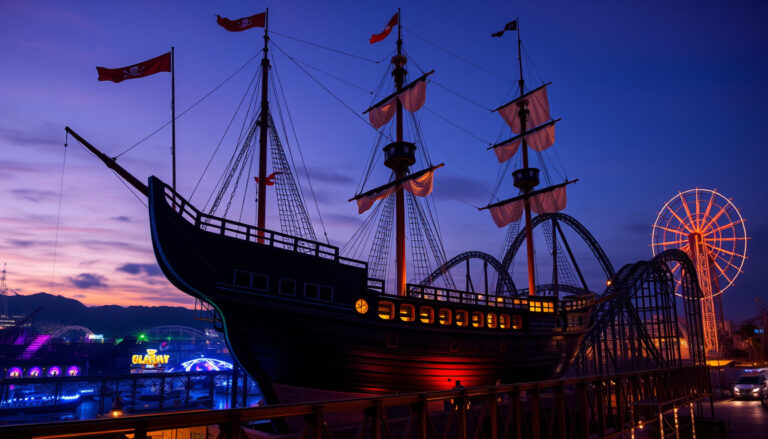 Rainbows End Pirate Ship: New Pacifica Ride Opens 2025
 New Zealand Visitor Visa for Fijians: Guide 2026
 Words That Start With K: Complete List with Meanings & Game Tips
 Difference Between RAM and ROM: 5 Key Differences Explained
 2026 BYD Shark 6 NZ Price: $69,990 Specs & Review
 Book Character Dress Up: Easy Ideas for Kids & Adults
 Married at First Sight UK: 2026 Reunion, Where to Watch & Couples
 Best Crypto Casino Betstrike: 20% Instant Rakeback Reviewed