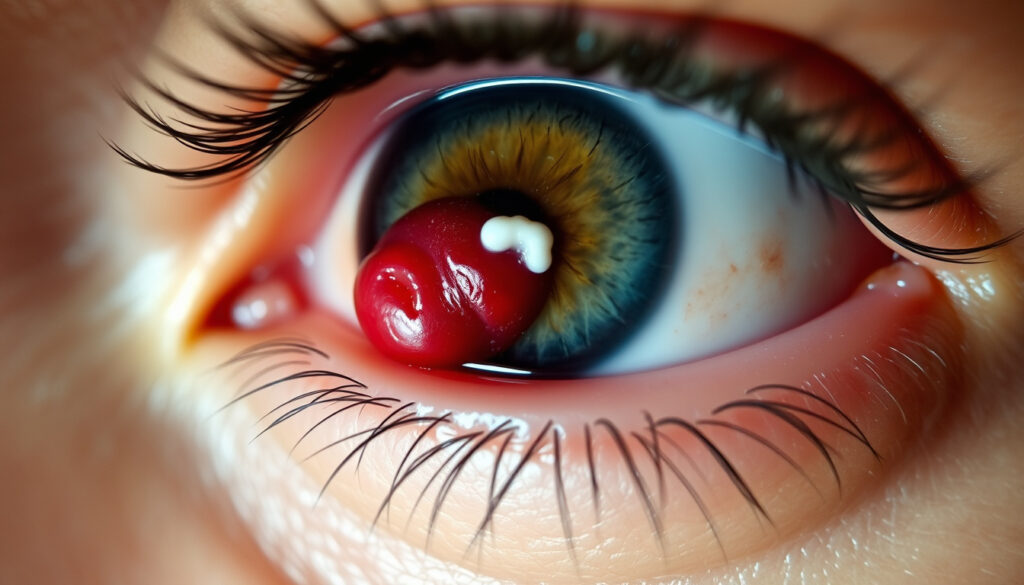
What Causes a Stye? Causes, Treatment, and Prevention
Few things get your day off to a rough start like a tender, red bump on your eyelid. A stye is usually caused by a bacterial infection in an oil gland, and most clear up within a week with home care.
Common cause: Bacterial infection (Staphylococcus) ·
Typical duration: 3–7 days ·
Affected area: Eyelid edge (external) or inside (internal) ·
Treatment success with warm compresses: Resolves in a few days for most ·
Contagious: No
Quick snapshot
- Painful red bump on eyelid (Mayo Clinic)
- Caused by bacterial infection (Mayo Clinic)
- Usually resolves in 3–7 days (Mayo Clinic)
- Warm compresses (Merck Manual)
- Gentle massage (Merck Manual)
- Avoid squeezing (Merck Manual)
- Medical help if persists (Merck Manual)
- Not contagious (Cleveland Clinic)
- Not directly caused by dirty pillows (Cleveland Clinic)
- Can occur even with good hygiene (Cleveland Clinic)
Key facts about styes: the table below summarizes the most important details.
| Item | Details |
|---|---|
| What is a stye? | An infected oil gland on the eyelid |
| Common cause | Staphylococcus bacteria |
| Duration | 3–7 days |
| First-line treatment | Warm compresses |
| Contagious? | No |
What Causes a Stye?
A stye forms when bacteria infect one of the tiny oil glands (meibomian glands) or eyelash follicles along the edge of your eyelid. The most common culprit is Staphylococcus aureus, a type of bacterium that normally lives on your skin without causing trouble. When it gets trapped inside a gland or follicle, it triggers infection and inflammation.
Bacterial Infection
- According to Mayo Clinic (leading U.S. medical center), styes are caused by staphylococcus bacteria infecting an eyelash follicle or oil gland.
- NHS (U.K. national health authority) confirms bacteria often infect the eyelash follicle or eyelid gland.
- Moorfields Eye Hospital (specialist eye hospital) notes that a stye arises from infection of an eyelash follicle in the eyelid.
Blocked Oil Glands
Blocked meibomian glands can also lead to a stye. When the gland’s opening is clogged with oil, dead skin cells, or debris, bacteria can multiply and cause a painful bump. This is especially common in people with blepharitis, a chronic inflammation of the eyelid margins.
Risk Factors: Blepharitis, Stress, Poor Hygiene
- Blepharitis: NHS says long-term blepharitis increases stye risk.
- Stress and sleep deprivation: Although not a direct cause, a weakened immune system can make you more prone to infections.
- Rubbing your eyes with unwashed hands can transfer bacteria.
- Dirty pillowcases may harbor bacteria but are not a primary cause according to Mayo Clinic.
Most people can reduce their stye risk by managing blepharitis, washing hands before touching their eyes, and changing pillowcases weekly — but even with perfect hygiene, styes can still happen because bacteria are naturally present on skin.
The implication: While risk factors are modifiable, styes can still occur due to the natural presence of bacteria on skin.
How to Get Rid of a Stye Quickly?
You want that bump gone fast. The most effective home remedy is consistent warm compresses. Here’s what the evidence says.
Warm Compresses
- NHS recommends applying a warm compress for 5 to 10 minutes, three to four times a day.
- Mayo Clinic advises using a clean washcloth soaked in warm water, applied for 5 to 10 minutes several times daily.
- The Merck Manual (trusted medical reference) calls hot compresses the best treatment and says they help the lesion drain spontaneously.
Eyelid Massage
After the compress, gently massage the swollen area with a clean finger in small circular motions. This can help the blocked gland open and drain. Always wash hands before and after.
Avoid Squeezing
Never pop or squeeze a stye. NHS warns that bursting it can spread infection deeper into the eyelid or even to the eye itself.
When to See a Doctor
- If the stye is very painful, affects your vision, produces pus, or spreads to the eyelid or eye (NHS).
- For persistent styes that don’t improve after a week, a clinician may prescribe antibiotic ointment or, per Merck Manual Professional, incision and drainage for external hordeola that don’t respond to compresses.
- Apply a warm compress for 5–10 minutes, 3–4 times daily.
- After each compress, gently massage the area with clean fingers.
- Never squeeze or try to pop the stye.
- If it doesn’t improve in a week or worsens, see a doctor.
For the vast majority of stye cases, the combination of warm compresses, good hygiene, and patience resolves the problem within a week. Resisting the urge to squeeze is the hardest — and most important — part.
The pattern: Consistent heat and hygiene are the most effective actions you can take.
Is a Stye Contagious?
Short answer: no. Styes themselves are not contagious because they are caused by bacteria that already live harmlessly on your own skin. Cleveland Clinic (renowned U.S. hospital system) explains that chalazia (a related but non-infectious lump) are also not contagious for the same reason.
However, the bacteria from a stye can spread to another person through direct contact — for example, if you touch your stye and then touch someone else’s eye. But the condition itself is not considered contagious in everyday settings like work or school. Barnsley NHS patient leaflet advises washing hands after touching the affected eyelid to reduce spread.
The implication: You don’t need to isolate yourself, but hygiene precautions make sense.
What Is the Difference Between a Stye and a Chalazion?
These two eyelid lumps are often confused, but they have key differences in cause, symptoms, and treatment. Here’s a comparison.
Three conditions, one pattern: styes are infected and painful; chalazia are blocked and usually painless.
| Feature | Stye (Hordeolum) | Chalazion |
|---|---|---|
| Cause | Bacterial infection of eyelash follicle or oil gland (Mayo Clinic) | Blocked meibomian gland, no active infection (Cleveland Clinic) |
| Symptoms | Painful, red, swollen bump on eyelid edge | Firm, painless lump further from eyelid margin |
| Location | Usually external on edge; internal stye on inner eyelid | Deeper in eyelid, away from edge |
| Appearance | Small, red, with possible yellow pus point | Round, smooth, skin-colored or slightly red |
| Treatment | Warm compresses, gentle massage, avoid squeezing (NHS) | Warm compresses; may require steroid injection or surgical drainage if large (Merck Manual Professional) |
| Acute vs chronic | Acute, resolves in days | May persist for weeks or become chronic |
The catch: Because a chalazion often starts as a stye that didn’t fully drain, the two can overlap. If a lump persists for more than two weeks without pain, it’s likely a chalazion and may need medical attention.
What Is an Internal Stye?
An internal stye (internal hordeolum) forms deeper inside the eyelid when a meibomian gland becomes infected. It’s often more painful than an external stye because it presses against the eyeball and may cause more swelling.
Symptoms
- Pain and tenderness inside the eyelid
- Swelling of the entire eyelid
- Redness on the inner surface
- Watery eyes or discharge
Causes
Same as external styes — staphylococcus bacteria infect the oil gland. Mayo Clinic confirms that the mechanism is identical, just located deeper.
Treatment
- Warm compresses remain first-line, but may need to be applied more frequently given the deeper location.
- Merck Manual Professional recommends oral antibiotics for internal hordeola that don’t respond, and incision and drainage if needed.
- Never try to pop an internal stye yourself — the risk of spreading infection deep into the orbit is higher.
What this means: Internal styes are more serious than external ones. If your entire eyelid swells or you have vision changes, see a doctor promptly.
Quotes from Experts
“Styes are caused by bacteria from your skin that get into the eyelash follicle or oil gland. Most people have these bacteria on their body without any problem.”
Mayo Clinic (leading U.S. medical center)
“Apply a warm compress several times a day to help the stye drain on its own. Never squeeze or pop it.”
Cleveland Clinic (renowned U.S. hospital system)
“You’re more likely to get a stye if you have long-term blepharitis. Good eyelid hygiene can help prevent them.”
NHS (U.K. national health authority)
Confirmed facts
- Bacterial infection causes styes (NHS)
- Styes are not contagious (Cleveland Clinic)
What’s unclear
- Exact role of diet and stress in triggering styes
- Whether chronic styes indicate an underlying condition
- Warm compresses aid healing (though widely recommended, evidence is mixed)
For anyone who has ever woken up with a painful eyelid bump, the path forward is refreshingly straightforward: warm compresses, good hand hygiene, and patience. The condition resolves on its own for the vast majority of people. But if you have recurrent styes or a lump that lingers beyond two weeks, it’s worth checking with your doctor — not only to rule out a chalazion but also to explore whether underlying blepharitis or an immune issue needs attention. For the everyday stye sufferer, the choice is clear: stick with heat and hygiene, and resist the urge to squeeze.
rieyeinstitute.com, milaneyecenter.com, allaboutvision.com, westbocaeyecenter.com, best.barnsleyccg.nhs.uk, merckmanuals.com, gpnotebook.com
For a deeper look into the bacterial origins and prevention tips, see our detailed guide on what causes a stye.
Frequently asked questions
Can a stye cause vision problems?
Most styes do not affect vision, but if swelling spreads to the entire eyelid or the stye presses on the cornea, you may experience blurred vision. Seek medical help if vision changes occur.
Should I wear contact lenses with a stye?
No. NHS advises avoiding contact lenses and eye makeup until the stye has burst and healed completely to prevent re-infection.
How long does a stye last?
Typically 3 to 7 days. With warm compresses, most drain and heal within a week. If it lasts longer, see a doctor.
Can stress cause a stye?
Stress alone doesn’t cause styes, but it can weaken your immune system, making you more susceptible to bacterial infections. It’s a contributing factor, not a direct cause.
What happens if a stye doesn’t go away?
If a stye persists beyond two weeks, it may become a chalazion or require medical treatment such as antibiotic ointment or, in rare cases, incision and drainage by a clinician (Merck Manual Professional).
Can I use makeup while I have a stye?
Avoid eye makeup until the stye has healed to prevent introducing more bacteria. Replace any mascara or eyeliner used before the stye appeared.
Is it safe to pop a stye?
Never. Squeezing can spread infection deeper into the eyelid and worsen the problem. Let it drain naturally with warm compresses.
Do styes recur?
Some people get styes repeatedly, especially if they have blepharitis or meibomian gland dysfunction. Good eyelid hygiene can reduce recurrence.
More related posts
 Apple Watch SE 44mm Review: Price, Specs, Worth It
 Business for Sale Wellington: Complete Buying Guide
 Stanmore Fish and Chips – Menu, Reviews, Hours & Location Guide
 Dyson Fan and Heater – Bladeless Models Review
 Double Bed Base NZ: Compare Wooden, IKEA & Cheap Options
 Daylight Savings NZ 2026: Dates, Clocks Forward/Back Guide
 What Are the Ten Commandments? List and Order, Simple Explanation
 Dunedin to Christchurch Flights: Time, Airlines & Alternatives